Mozambique LNG restarts as Cabo Delgado violence widens
TotalEnergies relaunched the $20bn Afungi project in January 2026. In the same province, security incidents rose and the humanitarian appeal stayed a quarter funded.
Why it matters. Mozambique LNG is the largest single foreign investment on the continent's east coast, and it is restarting inside an active insurgency. The project's schedule and the province's violence are now the same story.
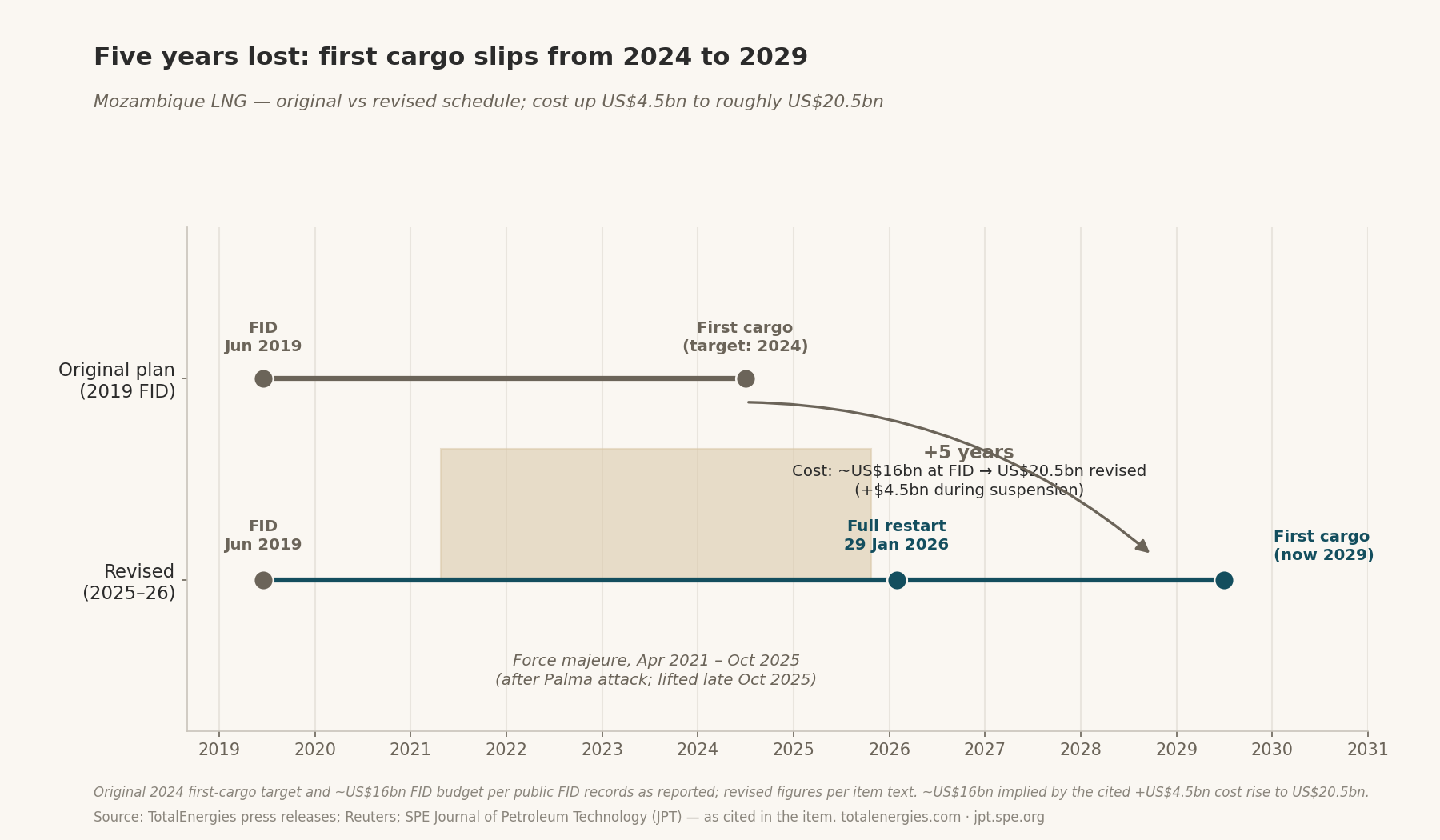
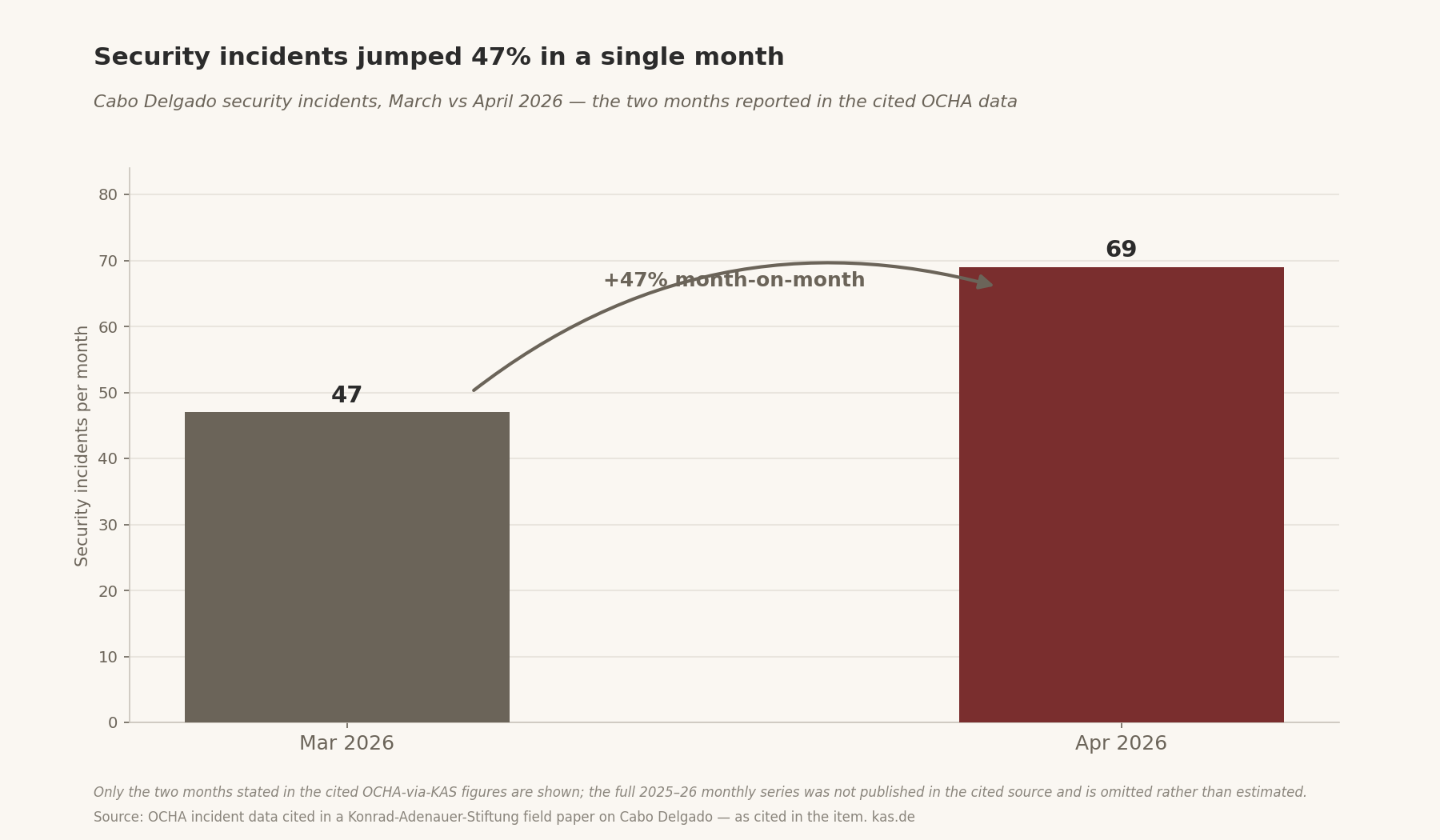
The facts. TotalEnergies and partners lifted the 2021 force majeure in late October 2025, Reuters reported, and the company announced the full restart of onshore and offshore activities on 29 January 2026 in a TotalEnergies press release. Costs rose by about US$4.5 billion during the four-year suspension, per Reuters, with the revised budget put at roughly $20.5 billion and first cargo targeted for 2029, according to SPE's Journal of Petroleum Technology. ExxonMobil lifted force majeure on the neighbouring Rovuma project in November 2025, Reuters reported. The UK then withdrew $1.15 billion of export credit support, per Reuters. Meanwhile OCHA data cited in a Konrad-Adenauer-Stiftung field paper records security incidents rising 47% in April 2026 month-on-month, from 47 to 69. IOM tracking reported over 15,000 people in
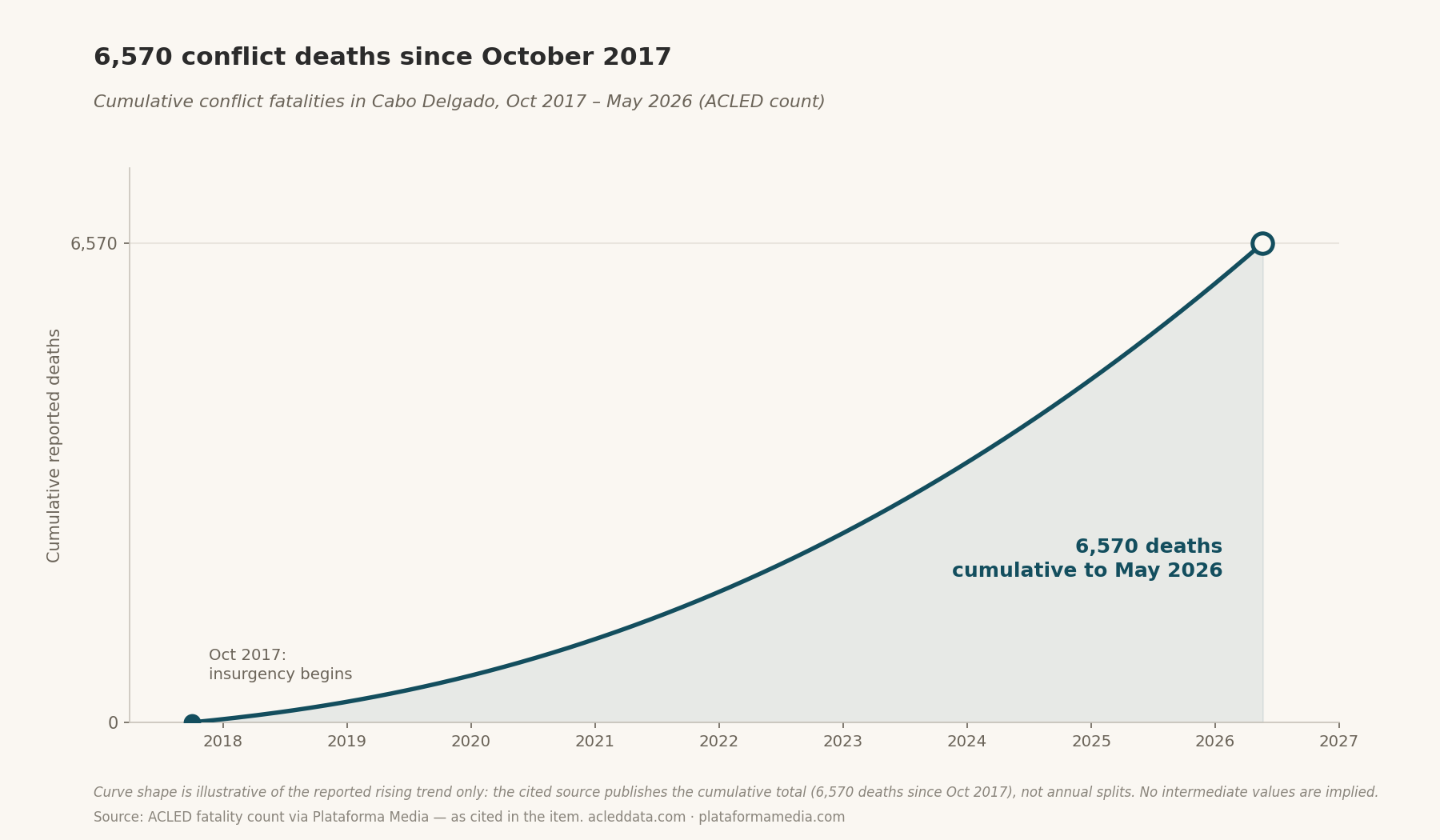
displacement sites and host communities in the Ancuabe corridor by 20 May 2026, per ReliefWeb's situation report. ACLED counts 6,570 conflict deaths since October 2017, reported by Plataforma Media.
Context. Force majeure was declared in April 2021 after an assault on Palma. The re-entry decision rested on an improved security environment and foreign force presence, but the violence has migrated inland and south rather than ended.
Between the lines. Two divergent risk judgements are being made on the same map: private capital is re-entering while a public creditor exited and humanitarian funding lags. That combination usually means the project's own security perimeter, not the province's, is the operative variable — a durable arrangement for the plant, an unresolved one for everyone outside the fence.
What to watch. Whether Maputo's approvals of the revised budget and schedule are finalised without further concession disputes; Exxon's Rovuma final investment decision; displacement trends through the dry season; and whether other export credit agencies follow the UK.
Method and sources. Company statements from TotalEnergies, Reuters wire reporting, trade coverage from JPT, OCHA-sourced incident data via KAS, IOM displacement tracking via ReliefWeb, and ACLED fatality counts via Plataforma Media.
Related reading: Africa's 2026 borrowing window; One year of the Washington Accords.
Charts & visuals
X: Mozambique LNG restarted on 29 January 2026 with a $20.5bn budget and first cargo in 2029. In the same province, security incidents rose 47% in April and the UK pulled $1.15bn of credit support. Two risk verdicts, one map →
LinkedIn: A $20bn project restarted in January. A public creditor walked away in December. Security incidents in the surrounding province rose 47% month-on-month in April. Mozambique LNG is now a live case study in how differently private capital, export credit agencies, and humanitarian funders price the same conflict. Our brief on schedule, cost, and the widening war around Afungi.
Author
Sign up for New Axis Media newsletters.
Stay up to date with curated collection of our top stories.