Guinea-Bissau's transition: referendum, then a December vote
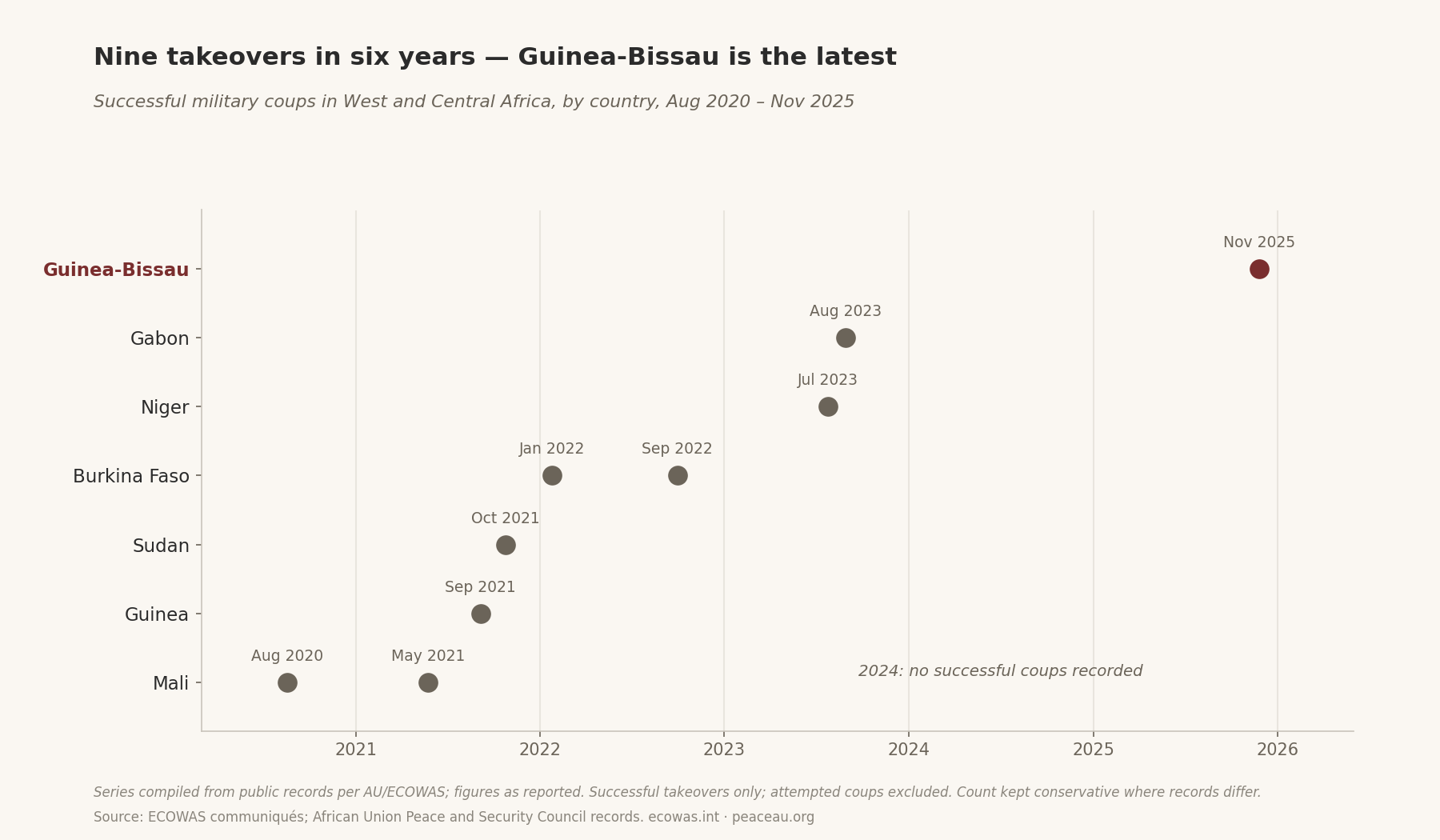
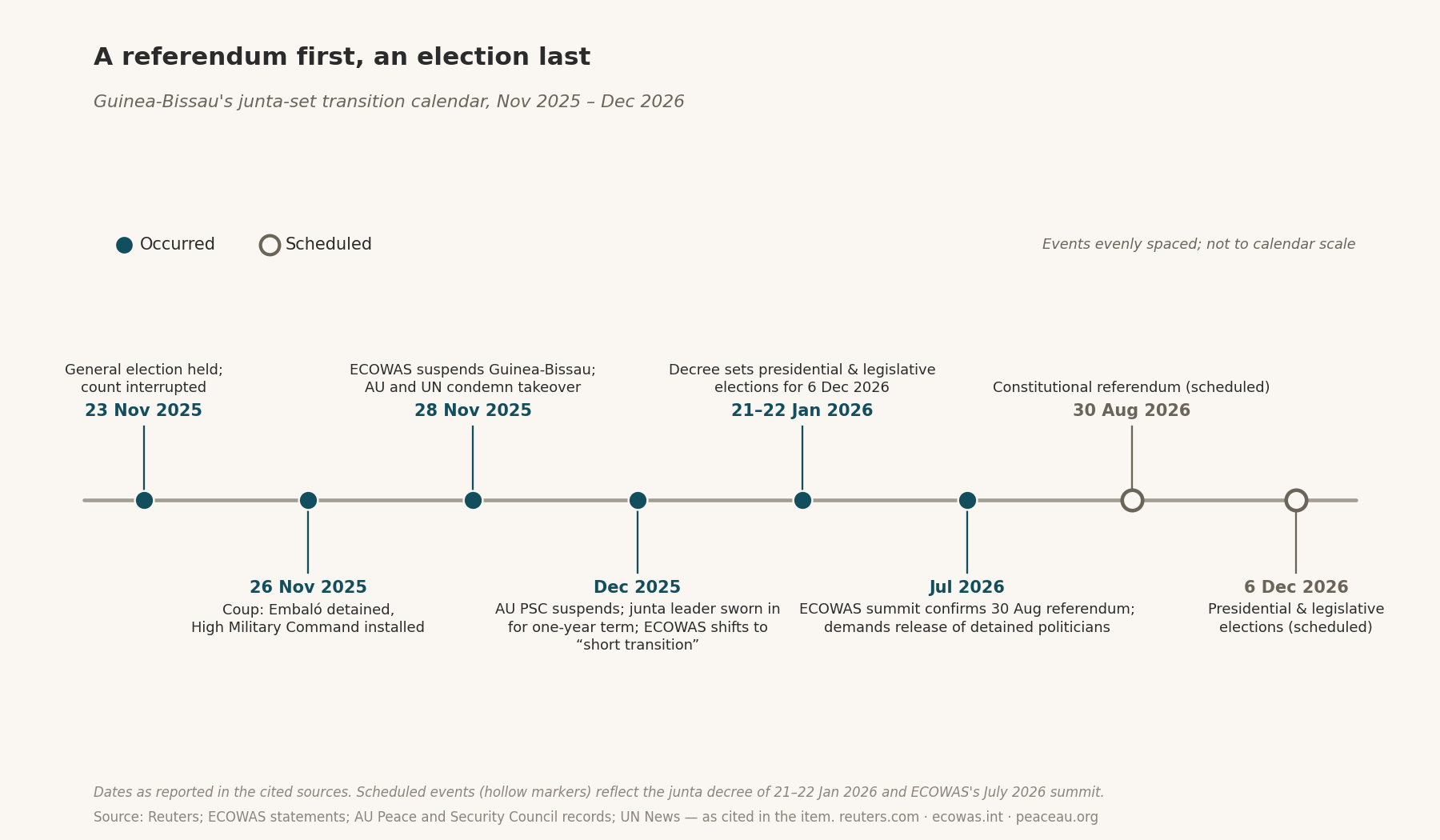
The junta interrupted a counted election in November 2025. Its answer to ECOWAS is a constitutional referendum in August and fresh elections on 6 December.

Why it matters. Guinea-Bissau is the test of whether West Africa's regional bodies can still reverse a coup, or only manage one. The answer will shape how the next general in the region calculates risk.
The facts. On 26 November 2025, military officers seized power a day before results were due from the 23 November general election, detaining President Umaro Sissoco Embaló and installing a High Military Command, as Al Jazeera reported at the time. ECOWAS suspended the country from its decision-making bodies within days, Africanews reported, and the African Union Commission chairperson condemned the takeover while the UN Secretary-General demanded "immediate and unconditional restoration of constitutional order", per UN News. On 21–22 January 2026 the transitional president signed a decree setting presidential and legislative elections for 6 December 2026, Reuters reported. ECOWAS's July 2026 summit confirmed a constitutional referendum on 30 August ahead of that vote and again demanded the release of detained politicians including Domingos Simões Pereira, according to Reuters coverage carried by US News.
Context. ECOWAS's opening position was restoration of the interrupted count. By mid-December 2025 it had shifted to accepting a "short transition" leading to a new election — a substantive climbdown documented by Amani Africa's Peace and Security Council analysis, which also notes the AU PSC suspended the country and the junta swore in its leader as interim president for a one-year term.
Between the lines. A referendum scheduled three months before a general election is the tell. Constitutional revision under military supervision changes the rules of the game the vote is meant to settle, and it consumes the transition's remaining calendar. Detentions of opposition figures compound the problem: an election run on new rules with sidelined competitors is a legitimation exercise, not a restoration.
What to watch. Whether the 30 August referendum text is published far enough in advance for scrutiny; whether Simões Pereira and others are released; whether ECOWAS moves from threatened targeted sanctions to actual designations; and whether the 6 December date holds.
Method and sources. Wire reporting from Reuters, regional coverage from Africanews and Al Jazeera, primary statements from the AU Commission and the UN, and PSC-focused analysis from Amani Africa.
Related reading: Power Map: the African Union's 2026 decision chain; Tanzania after 29 October.
Charts & visuals
X: Guinea-Bissau's junta answered ECOWAS with a calendar: constitutional referendum 30 August, elections 6 December. The election it interrupted in November 2025 was already counted. What that sequence actually does →
LinkedIn: ECOWAS opened with the strongest possible demand after Guinea-Bissau's November 2025 coup: finish the count. Eight months later it is negotiating over a junta-set timetable — a referendum on 30 August, elections on 6 December — with opposition leaders still detained. The gap between those two positions is the most important governance datapoint in West Africa this year.
Author
Sign up for New Axis Media newsletters.
Stay up to date with curated collection of our top stories.