Tanzania after 29 October: the cost of a 98% win
An official commission counted 518 deaths. Rights groups say far more. Tanzania's post- election settlement is now an accountability question.

Why it matters. Tanzania is East Africa's second-largest economy and a major electricity-access and logistics story. An unresolved mass-casualty event at the centre of its politics is a governance and investment variable, not only a human rights one.
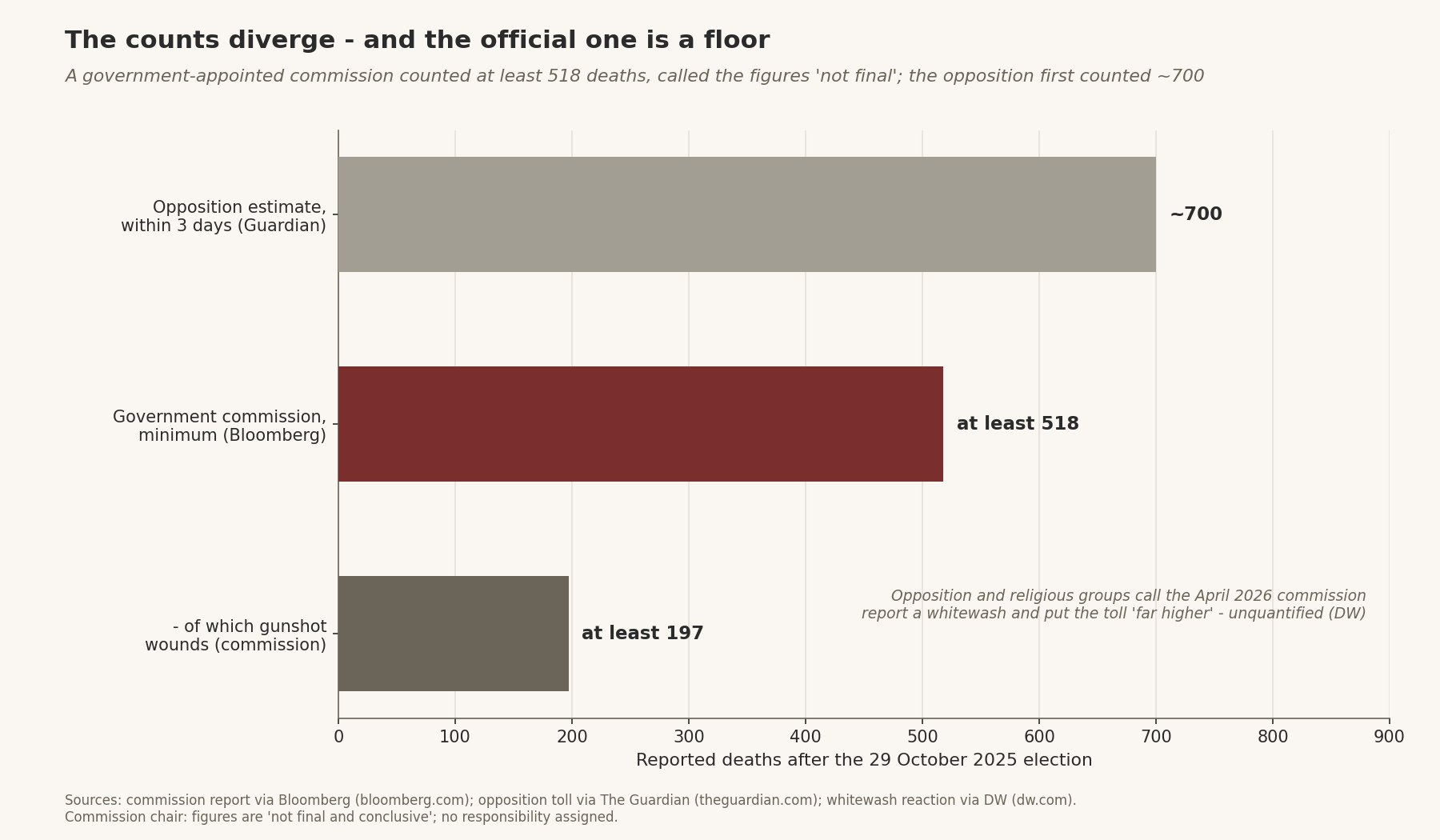
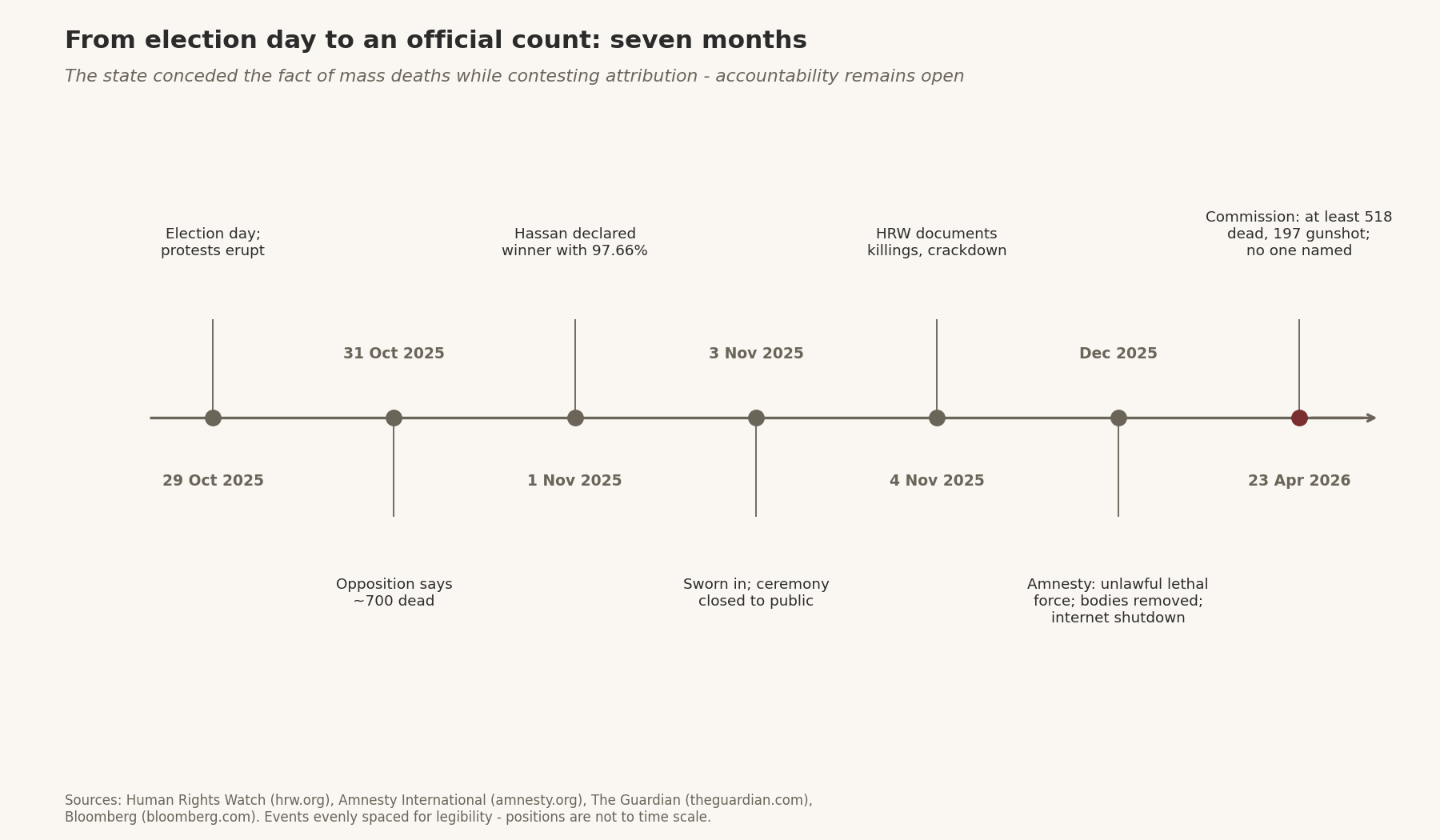
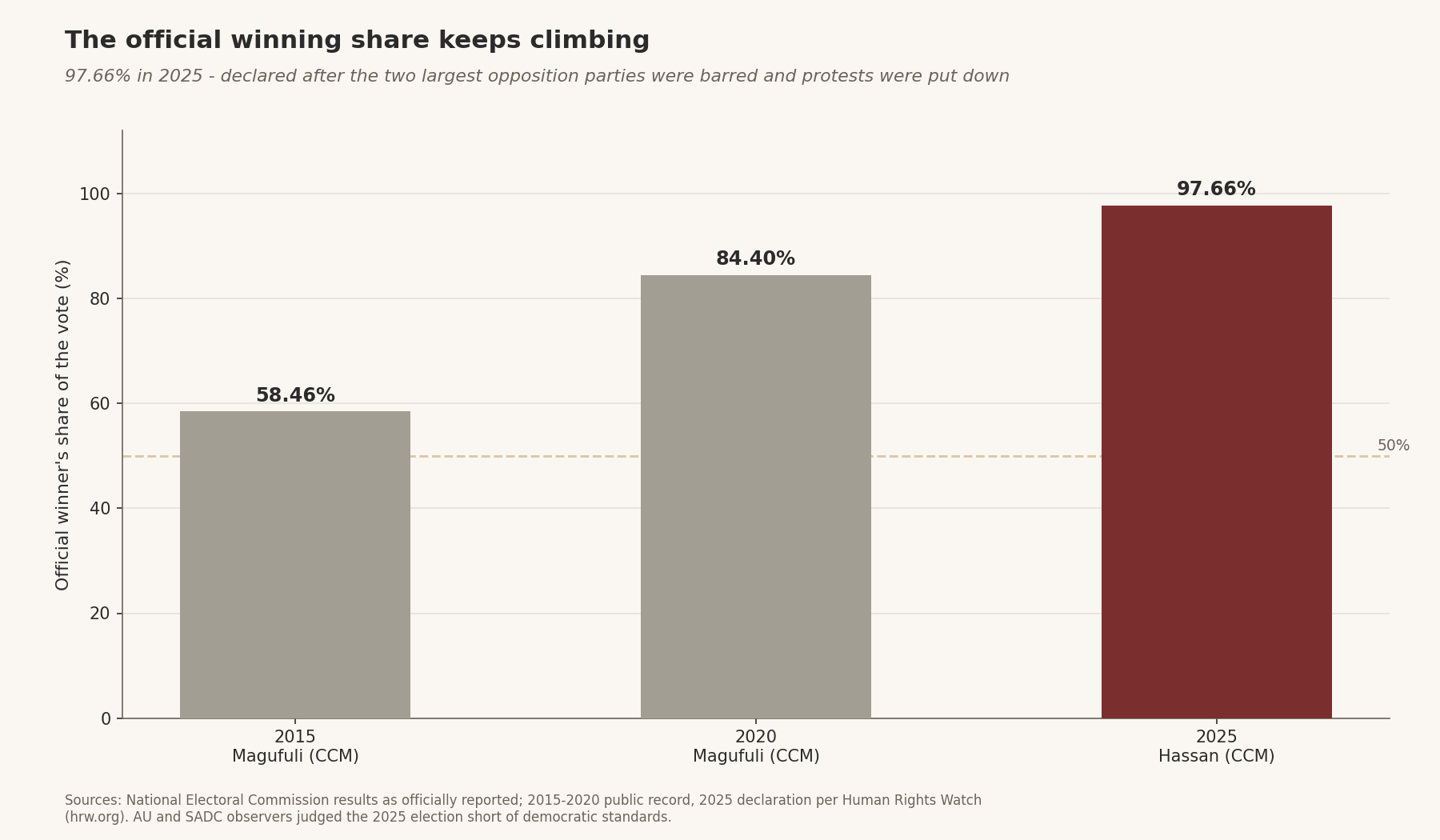
The facts. Tanzania's electoral commission declared President Samia Suluhu Hassan the winner with 97.66% of the vote on 1 November 2025, two days after protests erupted on election day, and she was sworn in on 3 November at a ceremony closed to the public, per Human Rights Watch. The two largest opposition parties had been barred from participating earlier in 2025. Amnesty International found security forces used "unnecessary or disproportionate force, including lethal force" between 29 October and 3 November, fired live ammunition at people posing no imminent threat, and collected bodies from mortuaries amid a nationwide internet shutdown, in a December 2025 investigation. The opposition put the toll at around 700 within three days, reported by The Guardian. A government-appointed commission chaired by retired Chief Justice Mohamed Chande Othman reported in April 2026 that at least 518 people died, at least 197 of them from gunshot wounds, calling the figures "not final and conclusive", per Bloomberg. Opposition and religious groups called the report a whitewash and put the toll far higher, per DW.
Context. The commission did not assign responsibility and recommended further investigation. International observers including the AU and SADC judged the election short of democratic standards.
Between the lines. The state has conceded the fact of mass deaths while contesting the attribution — an intermediate position that permits national reconciliation language without prosecutions. Watch the recommendations, not the total: a commission that names no perpetrators leaves accountability to the same institutions implicated in the deaths. Tanzania is simultaneously one of Mission 300's largest electrification success stories, with 7.5 million people connected, per the World Bank — development delivery and political closure are moving in opposite directions.
What to watch. Whether any prosecutions follow the commission's recommendation for further investigation; the status of detainees and treason cases; whether the internet shutdown precedent is codified; and the response of SADC and the AU beyond observation statements.
Method and sources. HRW and Amnesty International field investigations, Guardian and DW reporting, Bloomberg on the commission's official toll, and World Bank data on electrification for the development contrast.
Related reading: Guinea-Bissau's calendar coup; Mission 300 at the halfway mark.
Charts & visuals
X: Tanzania's own commission counted 518 deaths after the October 2025 election, 197 from gunshot wounds, and named no one responsible. The opposition says the true toll is far higher. Where accountability stands now →
LinkedIn: Six months after Tanzania's disputed election, a government-appointed commission led by a retired chief justice reported at least 518 deaths, 197 of them from gunshot wounds, while declining to assign responsibility. Amnesty International documented lethal force against people posing no threat, plus a nationwide internet shutdown. The same country is one of the continent's fastest electrifiers, with 7.5 million new connections under Mission 300. Two trajectories, one state.
Author
Sign up for New Axis Media newsletters.
Stay up to date with curated collection of our top stories.