Africa's 2026 bond window: fastest start since 2013
Six billion dollars in seven weeks, tighter spreads, and buybacks replacing new money. A tracker of who issued, at what price, and why.

Why it matters. Market access determines how much fiscal adjustment a government has to make in-year. In 2026 the window opened wide and early, and how it was used tells you which treasuries are managing maturities rather than chasing cash.
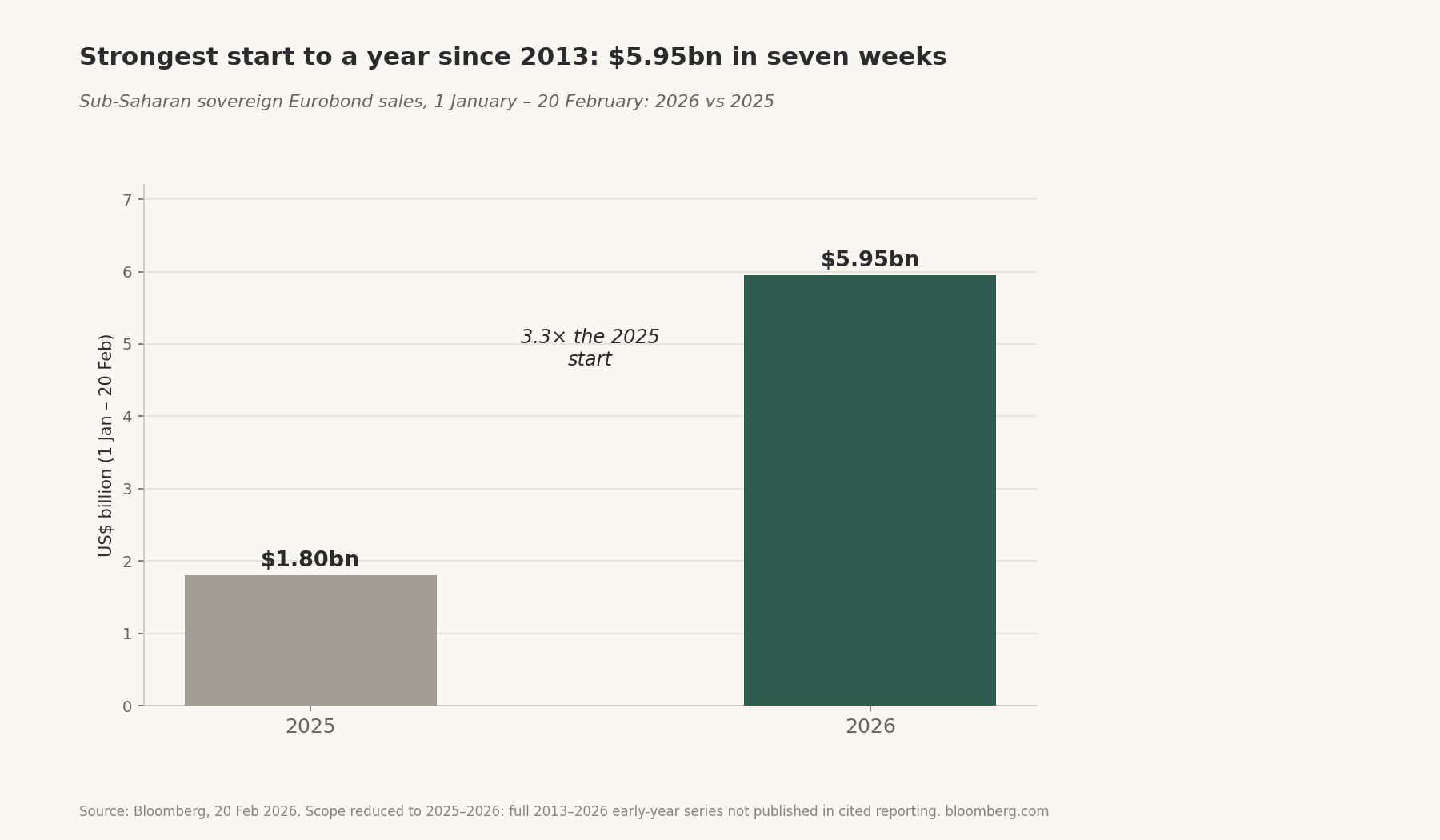
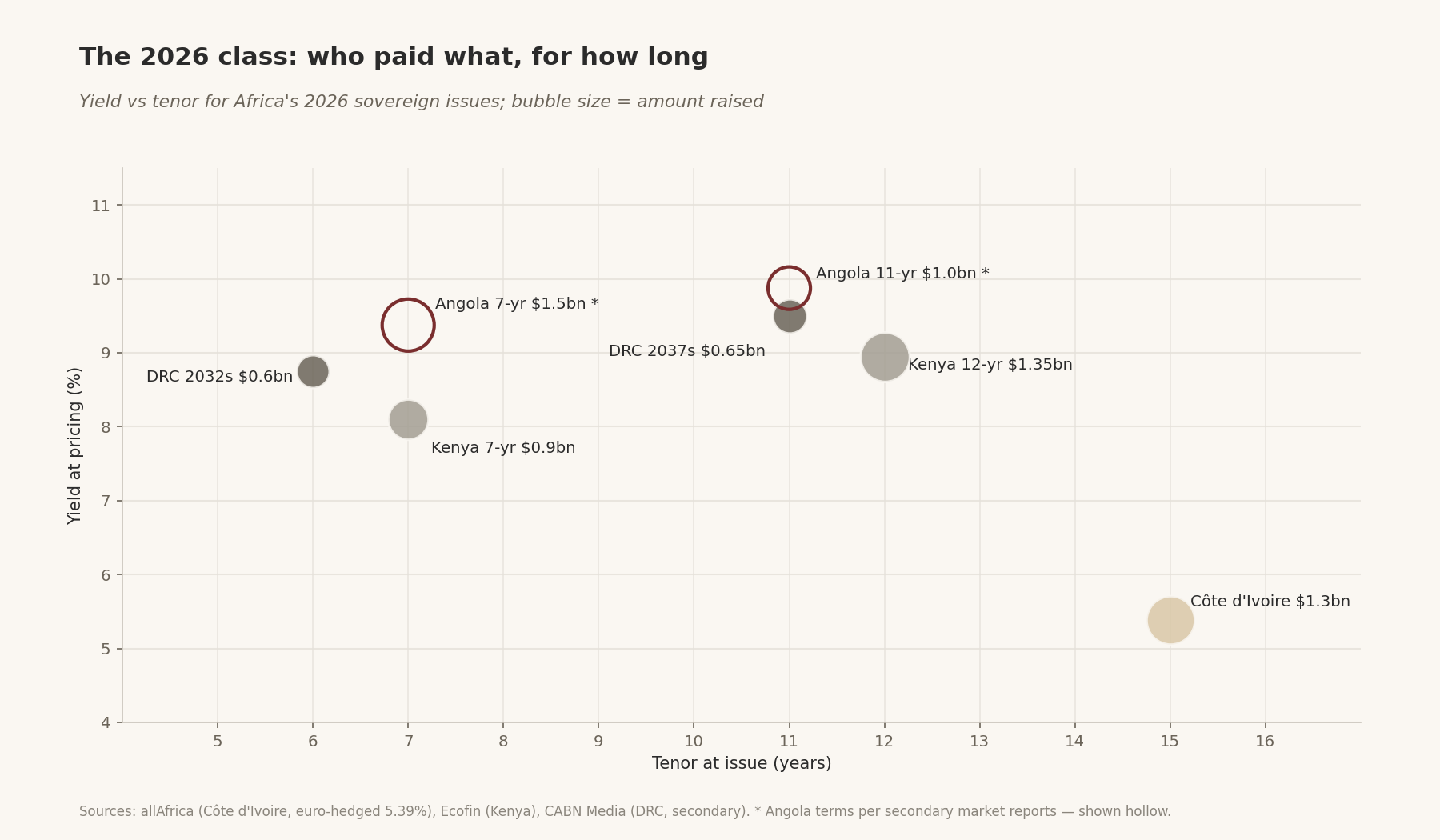
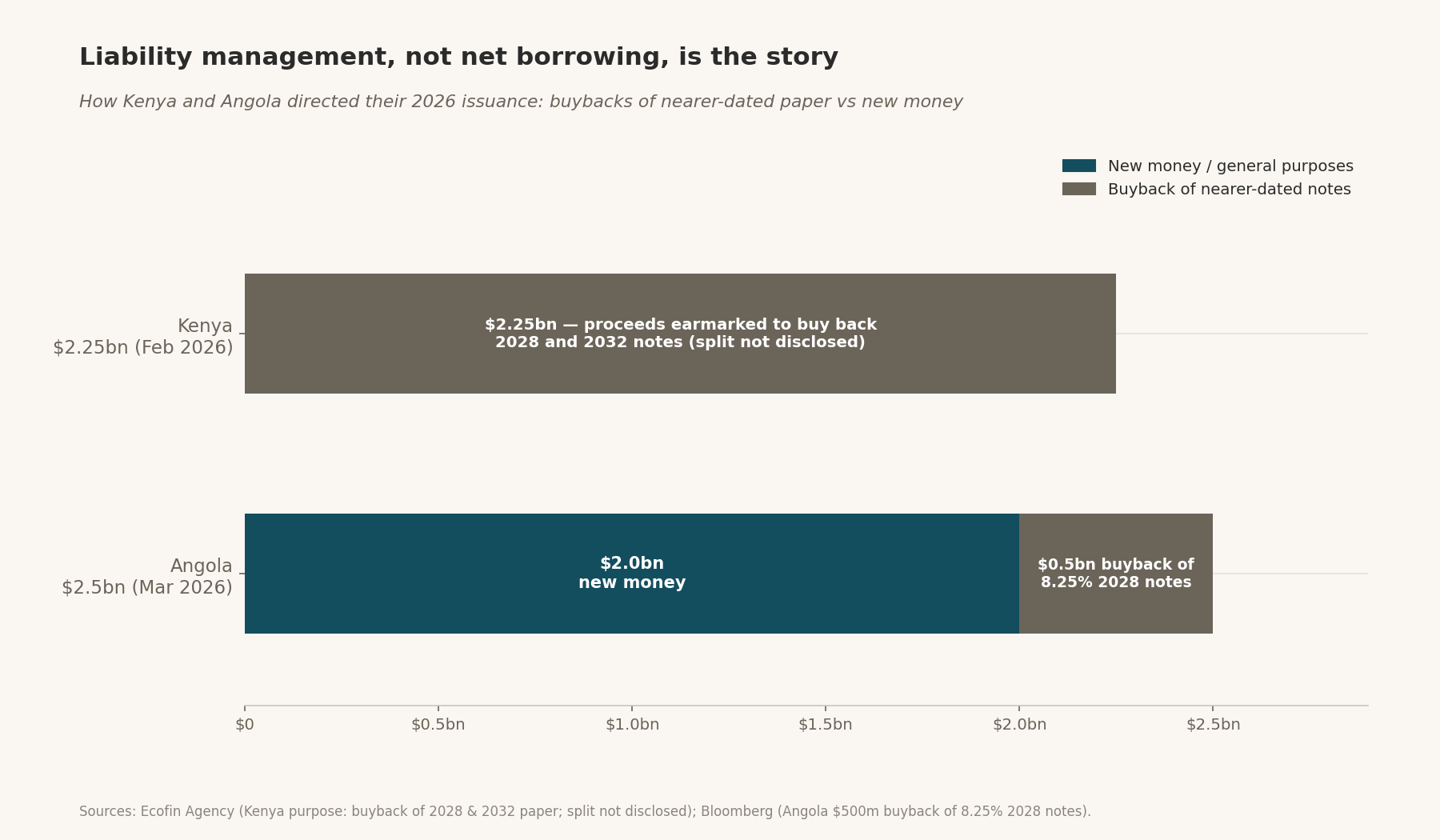
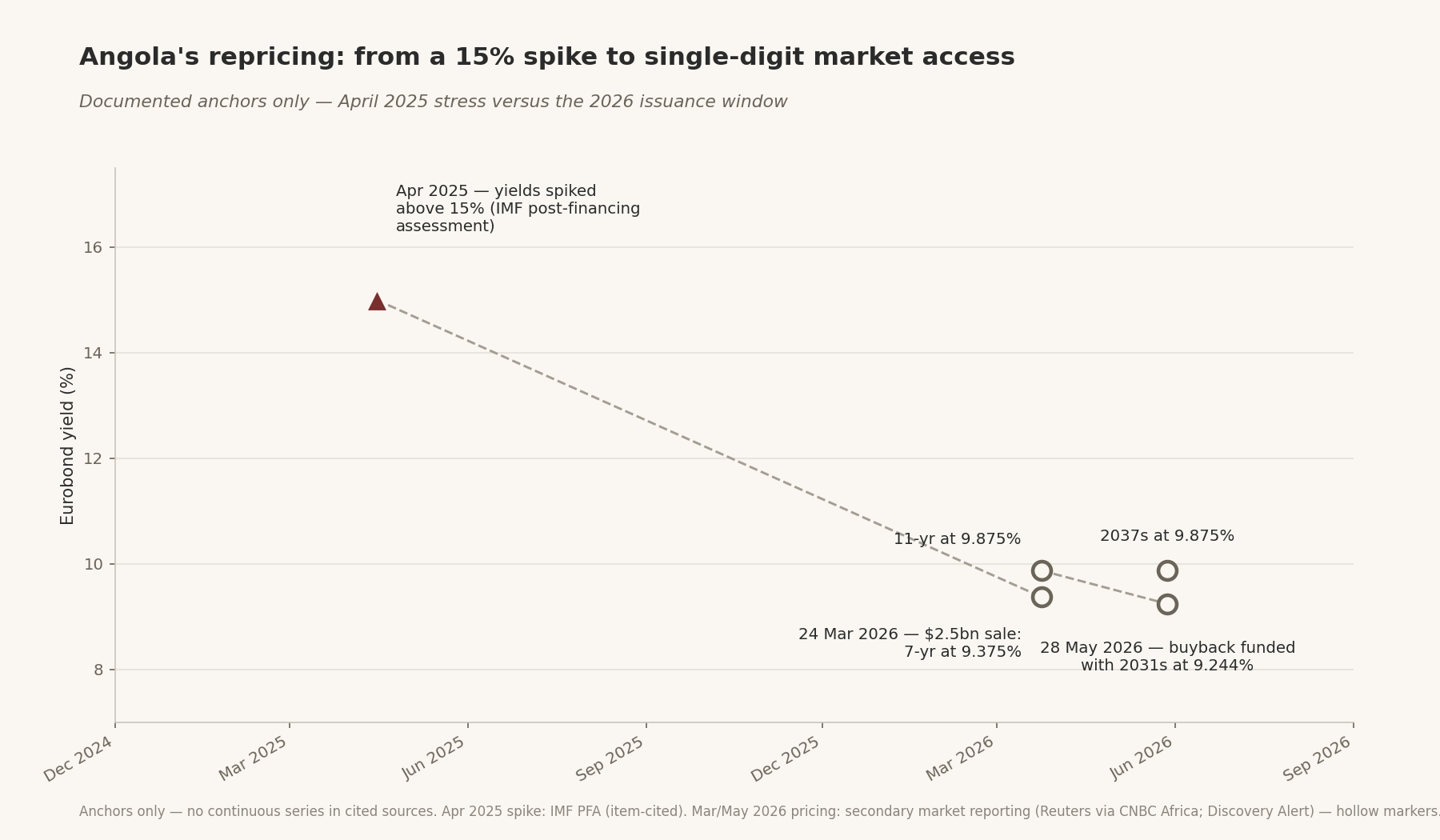
The facts. Dollar-denominated sovereign bond sales across Sub-Saharan Africa reached US$5.95 billion by 20 February 2026 — the strongest start to a year since 2013, against US$1.8 billion in the same period of 2025, Bloomberg reported. Côte d'Ivoire opened the wave with a US$1.3 billion 15-year issue on 18 February at a euro-hedged yield of 5.39%, with a US$6.3 billion order book, about 270 investors, and a negative new-issue premium of 25 basis points, reported by allAfrica. Kenya raised US$2.25 billion in a dual tranche — US$900 million of seven-year notes at 8.1% and US$1.35 billion of 12-year notes at 8.95% — to buy back 2028 and 2032 paper, per Ecofin Agency, which also notes Benin and Algeria tapping sukuk markets. Angola sold US$2.5 billion on 24 March 2026 with bids of more than double that amount, allocating US$500 million to buy back part of its 8.25% 2028 notes, Bloomberg reported. The DRC priced a US$1.25 billion debut in April 2026 — US$600 million of 2032s at 8.75% and US$650 million of 2037s at 9.50% — per CABN Media. Post-restructuring, Ghana made an early US$700 million Eurobond payment in early July 2026 ahead of a January 2027 scheduled maturity, reported by GhanaWeb, while its bonds continued to trade well above investment-grade yields.
Context. The window reflects global rate easing and compressed frontier risk premia rather than uniform improvement in fundamentals. Angola's own Eurobond yields had spiked above 15% in April 2025, per the IMF post-financing assessment — a reminder of how quickly access reprices.
Between the lines. The interesting pattern is liability management, not net borrowing. Kenya and Angola both used new issues partly to retire nearer-dated paper, which trades duration for coupon and buys calendar room. That is prudent while the window is open and expensive if spreads widen before the next maturity cluster. First-time issuers pricing near 9% are paying a novelty premium that only repeat access will compress.
What to watch. Whether second-half 2026 issuance sustains the pace; the spread between debut and repeat issuers; whether more sovereigns switch to buybacks and tenders; and the 2027 maturity wall for the countries that did not term out.
Method and sources. Bloomberg for aggregate issuance and Angola's transaction, allAfrica for Côte d'Ivoire's terms, Ecofin Agency for Kenya's tranches, CABN Media for the DRC debut, GhanaWeb for Ghana's early payment, and the IMF for Angola's 2025 yield spike. Secondary reports of pricing are labelled as such.
Related reading: Angola's 2026–2029 debt wall; One year of the Washington Accords.
Charts & visuals
X: $5.95bn of African Eurobond sales in the first seven weeks of 2026 — most since 2013. Côte d'Ivoire at 5.39%. Kenya at 8.1%/8.95%. Angola $2.5bn with $500m going straight to a buyback. The tracker →
LinkedIn: African sovereigns got their widest borrowing window in over a decade in early 2026: $5.95bn priced by 20 February, the most since 2013. What matters is how it was used. Kenya and Angola both directed part of new issuance into buybacks of nearer-dated paper. Côte d'Ivoire printed 15-year money at 5.39% with a negative new-issue premium. The DRC paid up to 9.50% for a debut. Liability management, not net borrowing, is the story.
Author
Sign up for New Axis Media newsletters.
Stay up to date with curated collection of our top stories.