The EU's €150bn Africa Bet: Green Transition, Migration, and the Search for Strategic Autonomy
As US aid retreats and rivals advance, Brussels is trying to reposition itself as Africa's "reliable partner." Its Global Gateway offer is real money — but it's entangled with migration politics and a hunger for critical minerals.
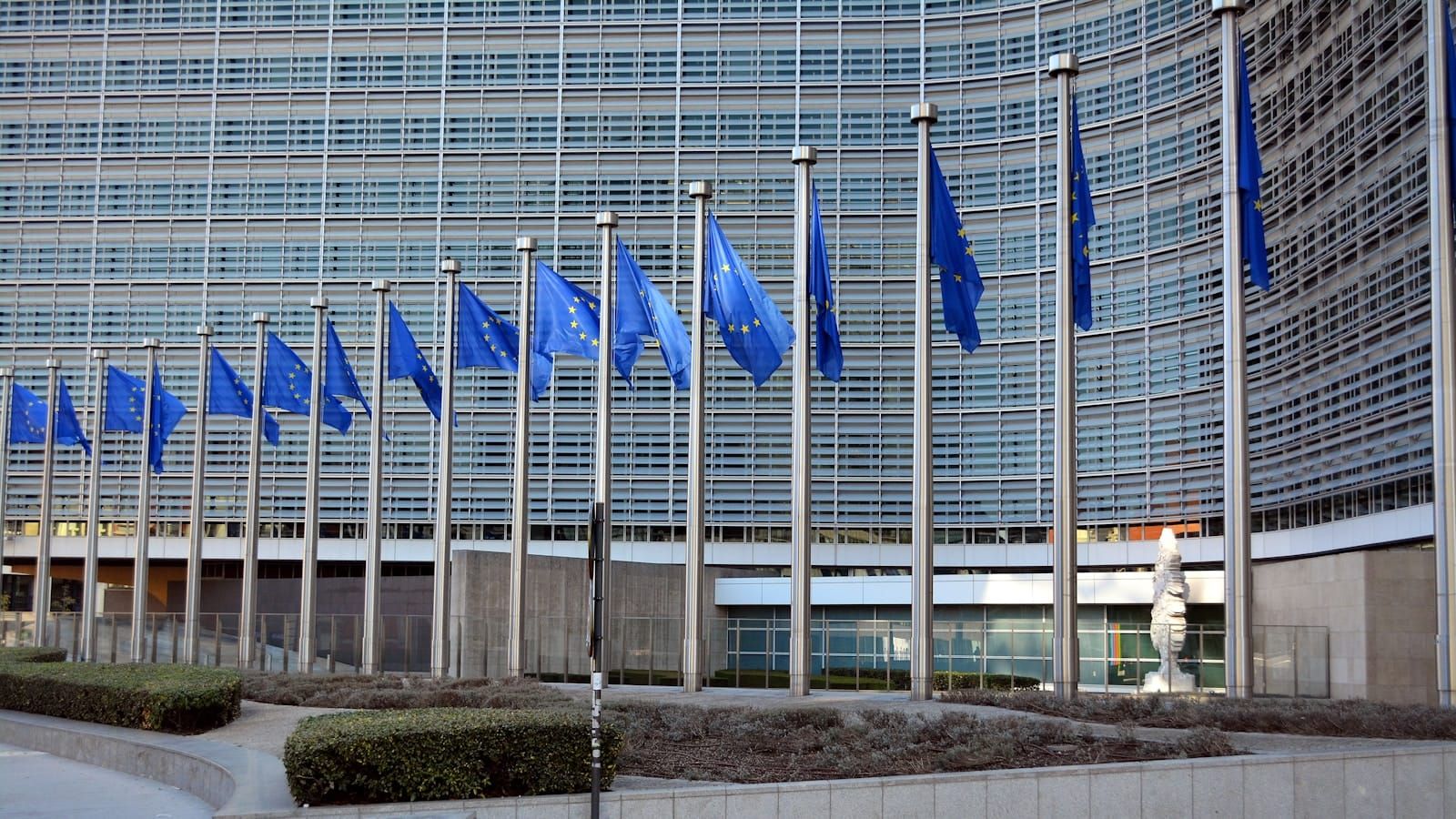
Europe's relationship with Africa is defined by proximity, history, and a growing anxiety about being outcompeted. No other external partner is bound to Africa by so many threads — colonial legacy, migration, trade, energy, security, and a shared Mediterranean space — and none is more exposed to the consequences of getting the relationship wrong. The EU has committed to mobilise €150 billion for Africa under its Global Gateway initiative — its answer to China's Belt and Road and, increasingly, to Gulf and US infrastructure diplomacy (European Commission). At the November 2025 EU–African Union summit, the two blocs pledged to boost trade and tackle migration, with a final declaration that "nodded to Europe's desire to secure critical minerals and Africa's desire for economic growth" (Africanews).
The reliable-partner pitch
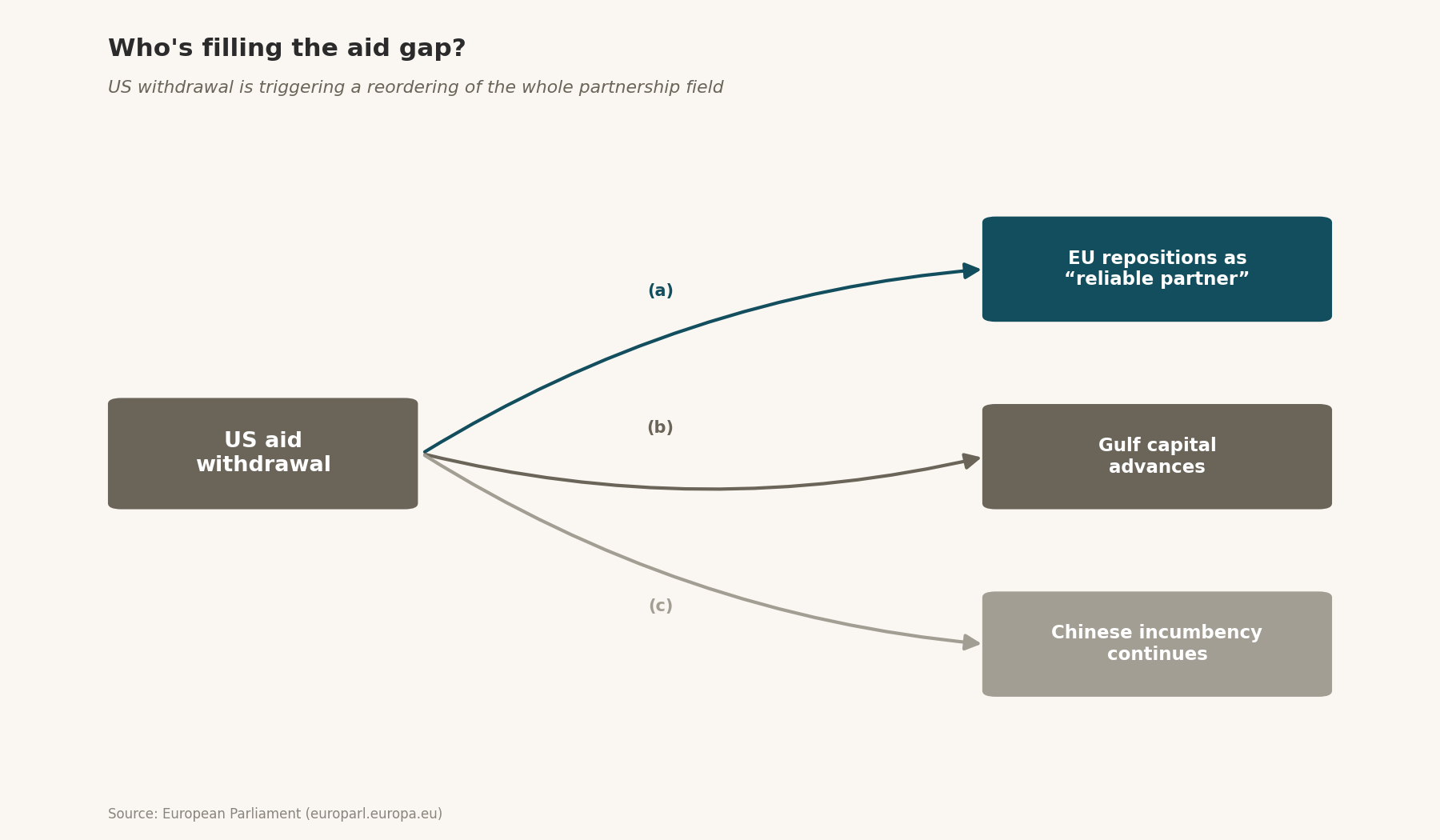
Brussels sees an opening. The European Parliament noted "a need for increased EU engagement to counter the influence of other external powers, like Russia and China," and — pointedly — an "opportunity to step up as a reliable partner by showing solidarity to Africa, particularly in light of the sudden withdrawal of US development and humanitarian funding" (European Parliament). The US retreat from aid (see Article 6) has handed Europe a rare positioning opportunity: to define itself, by contrast, as the partner that stays. Africa "remains a central pillar of the EU's geopolitical agenda due to its strategic importance in energy, trade, migration, and security" (European Parliament briefing).
But "reliable partner" is a claim African governments will test against delivery, not rhetoric. Europe has made similar promises before, and the credibility gap between announced initiatives and completed projects is exactly what has allowed China, the Gulf and others to gain ground. The pitch only works if Brussels can show, project by project, that its money moves faster and on better terms than its own history suggests.
The three entanglements
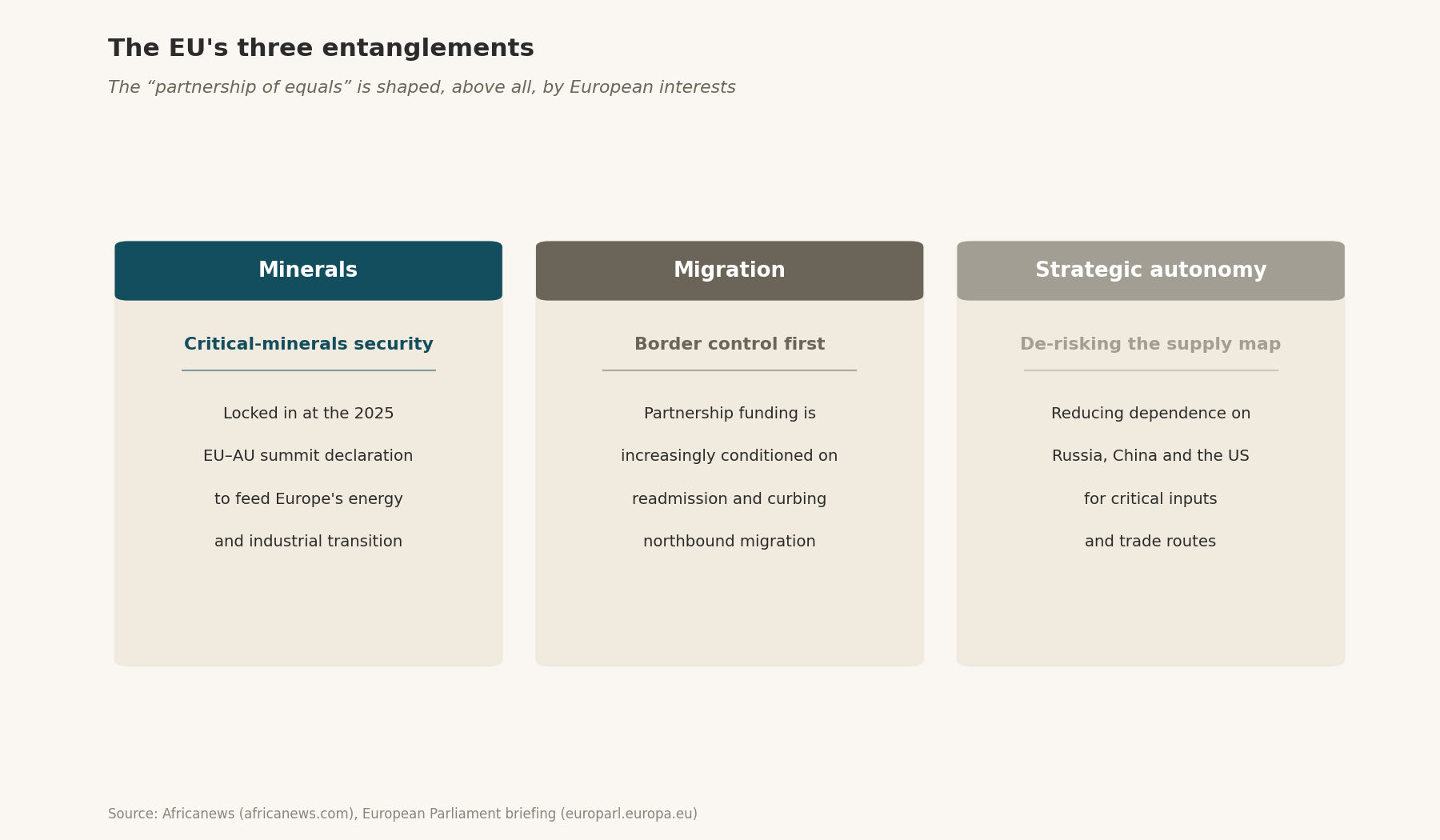
The EU's offer is real, but it comes freighted with European interests that African partners read clearly.
Minerals. The 2025 summit declaration explicitly linked European engagement to securing critical minerals (Africanews). Africa "has emerged as a battleground for its critical minerals and energy potential" among the EU, China, Russia and the US (Africanews). Europe's green transition and its industrial base depend on lithium, cobalt, copper and rare earths — much of it currently refined in China. The risk for Africa is that "green partnership" becomes a euphemism for raw-material extraction, unless it comes with local processing and value capture on African soil (see Articles 7 and 16). African negotiators increasingly insist that mineral deals include refining, not just mining.
Migration. The summit's twin focus on "trade and migration" reflects a European domestic politics in which migration management is often the price of the partnership (Africanews). With anti-immigration politics ascendant across European capitals, Brussels faces domestic pressure to condition development cooperation on border control. Critics on the African side worry that development money is being steered toward stemming migration rather than toward African development priorities — turning a partnership into a containment arrangement.
Strategic autonomy. For Europe, the deeper goal is reducing dependence — on Russian energy, on Chinese-controlled mineral supply chains, and on an increasingly unpredictable United States. Africa is central to that autonomy project: a nearby, resource-rich, fast-growing continent that could supply the energy, minerals and markets Europe needs to stand on its own. That is precisely why the relationship is being elevated — and why African governments have leverage to demand more than raw-material access in return.
The Global Gateway reality check
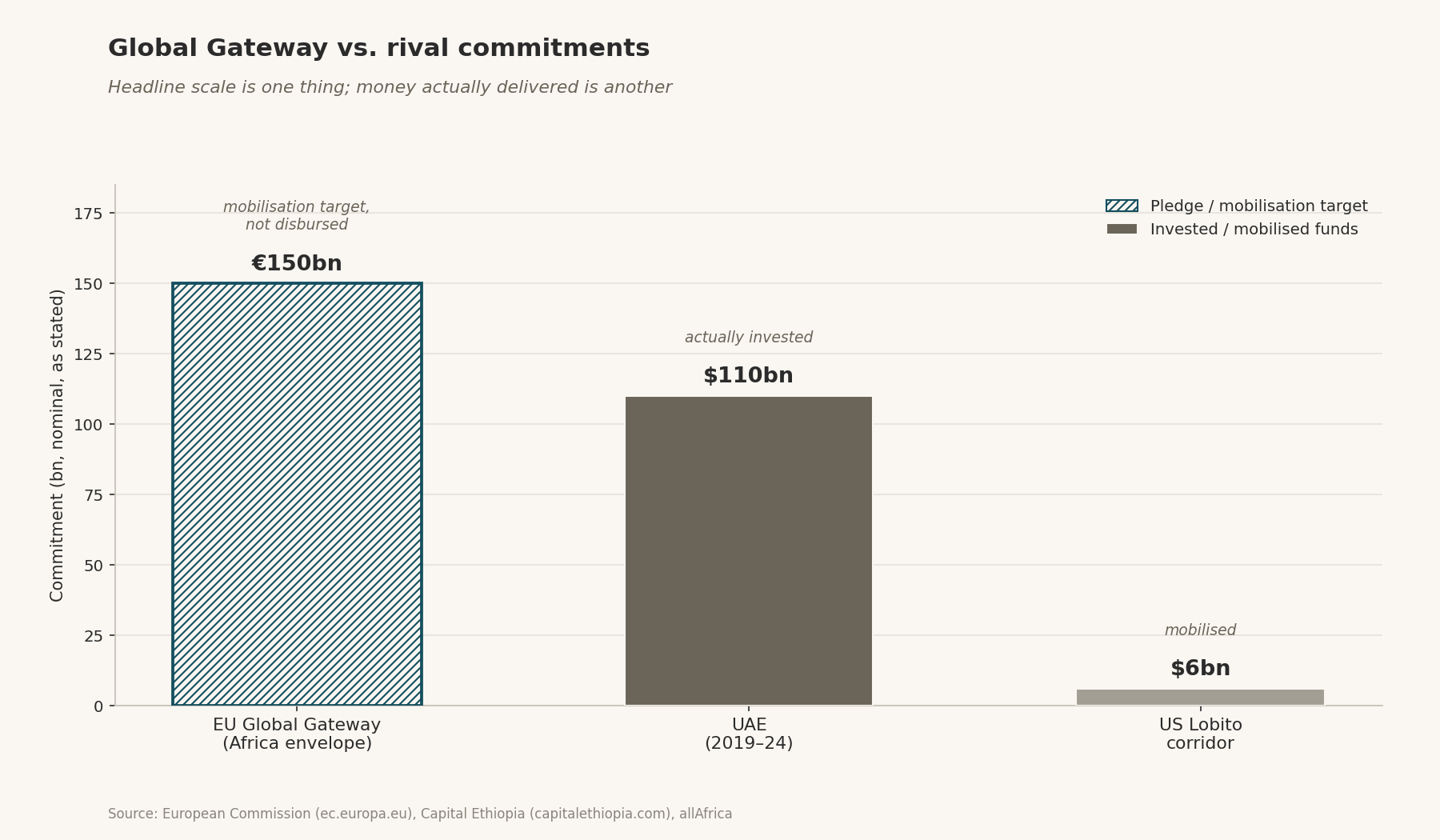
The €150 billion figure is a mobilisation target, not disbursed cash, and the EU and AU took stock of "significant progress" in 2025 while acknowledging the scale of what remains (European Commission). The distinction between "mobilised" and "disbursed" is where credibility is won or lost: a mobilisation target blends grants, loans, guarantees and hoped-for private co-investment into a single headline number that can overstate what actually reaches the ground.
The credibility test is delivery: whether Global Gateway projects materialise faster and on better terms than the alternatives, or whether they remain announcements. In a market where the UAE alone invested ~$110 billion in four years and the US mobilised ~$6 billion for a single corridor, Europe's headline number must translate into visible projects to matter (Capital Ethiopia; allAfrica). Against Gulf capital that arrives quickly and Chinese incumbency that is already entrenched, a slow-moving European offer risks being outpaced regardless of its nominal size.
The New Axis read
The EU's African bet is caught between genuine partnership and self-interest, and African governments are increasingly adept at exploiting the tension. Europe's comparative advantages are real — proximity, regulatory standards, deep market access, a green-transition agenda that aligns with African renewable potential, and a stability the more transactional powers cannot match. But its two obsessions, minerals and migration, risk reducing a partnership of equals to a transaction in which Europe takes ore and keeps out people.
The African test for Brussels is simple and demanding: does "strategic partnership" mean factories and value chains on African soil, or does it mean raw materials out and migrants kept back? Africa now has enough alternative suitors — the Gulf, China, the US, and increasingly its own regional institutions — to insist on the former. Whether Europe meets that standard will determine if "reliable partner" becomes a reality or remains a slogan.
Charts & visuals
X: The EU has pledged €150bn for Africa under Global Gateway, positioning as the "reliable partner" as US aid retreats. But the 2025 EU-AU summit tied it all to two things: critical minerals & migration. Partnership or transaction? 🇪🇺🌍
LinkedIn: As US aid retreats and the Gulf and China advance, Brussels is repositioning as Africa's "reliable partner," with a €150bn Global Gateway pledge. But the November 2025 EU–AU summit revealed the entanglements: critical minerals and migration. New Axis Media asks whether Europe's African bet means factories on African soil — or just raw materials out and migrants back.
Author
Sign up for New Axis Media newsletters.
Stay up to date with curated collection of our top stories.