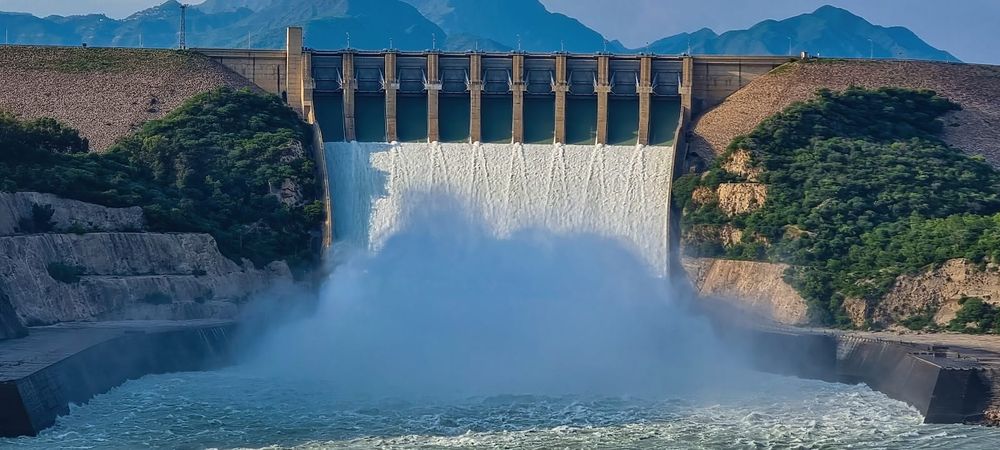
One year of the Washington Accords: peace on paper only
Two negotiating tracks, five oversight committees, and a front line that keeps moving. What the DRC–Rwanda process has and has not delivered.

Why it matters. Eastern Congo is where mineral supply chains, regional security, and great-power mediation intersect. A process that generates documents faster than compliance is itself a risk signal.
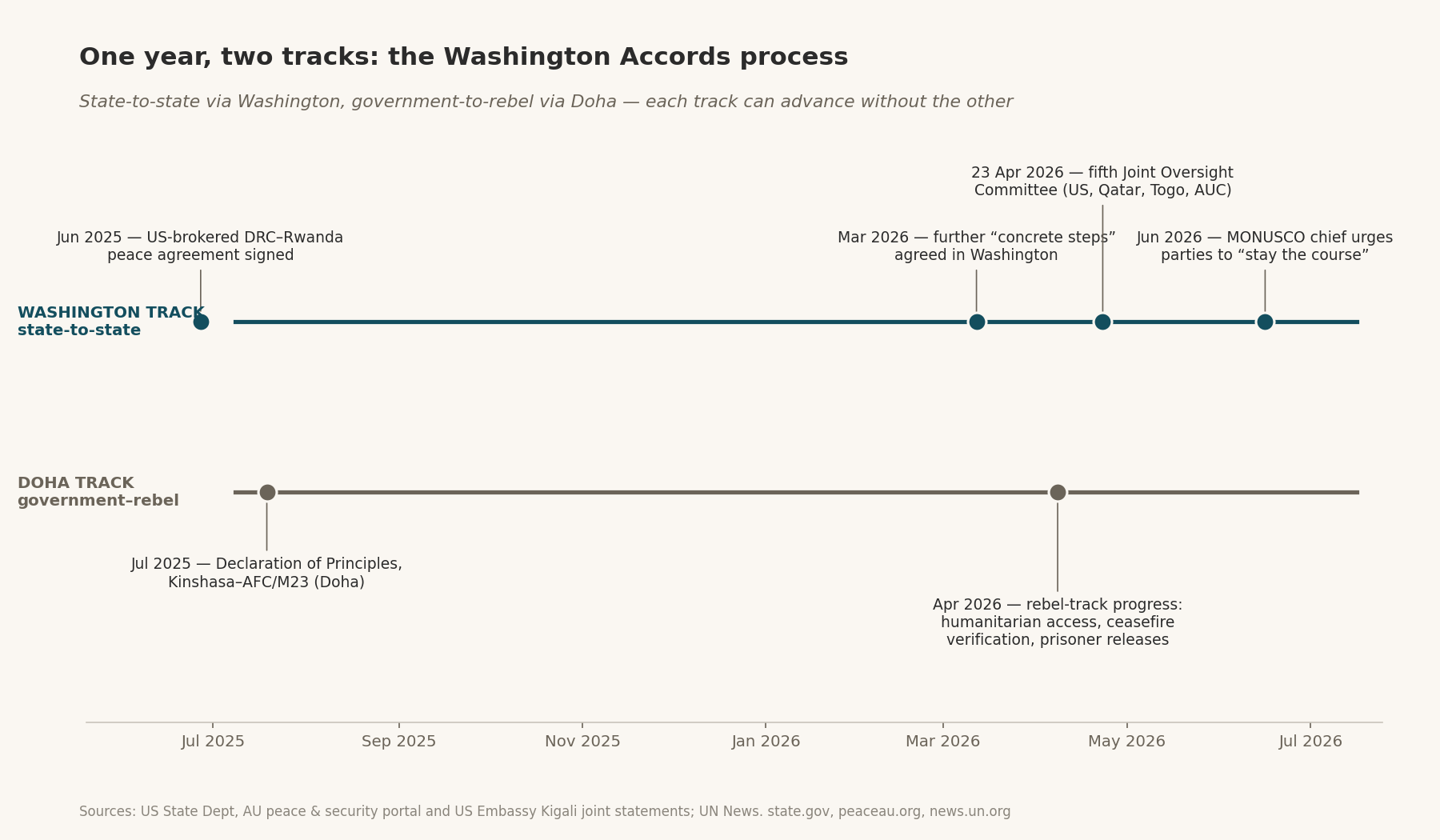
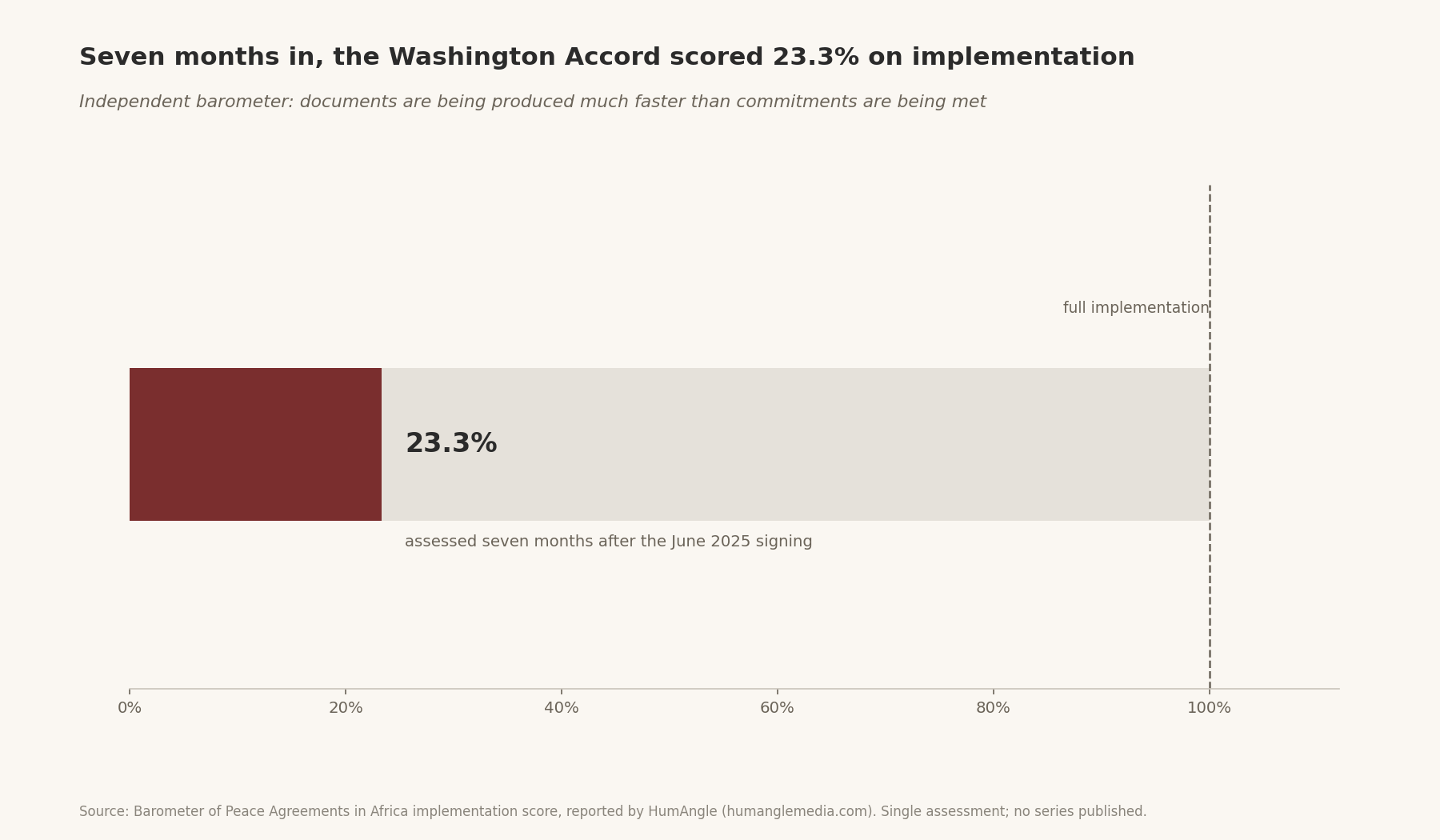
The facts. The DRC and Rwanda signed a US-brokered peace agreement in June 2025, with a rebel-track Declaration of Principles between Kinshasa and AFC/M23 signed in Doha in July 2025, welcomed by Rwanda's foreign ministry. By March 2026 the two states agreed further "concrete steps" in Washington, per a State Department joint statement, and on 23 April 2026 a fifth Joint Oversight Committee met in Washington with the US, Qatar, Togo as AU mediator, and the AU Commission, according to a joint statement published by the AU peace and security portal. On the rebel track, Kinshasa and AFC/M23 reported progress in April 2026 on humanitarian access, ceasefire verification, and prisoner releases, per a joint statement circulated by the US Embassy in Kigali. Implementation has lagged the diplomacy: the Barometer of Peace Agreements in Africa assessed the Washington accord at 23.3% implementation seven months in, reported by HumAngle. In June 2026 the new head of MONUSCO urged parties to "stay the course" and implement commitments fully, per UN News; in February the UN had welcomed talks while warning the situation on the ground remained volatile with M23 controlling large areas of North and South Kivu, also per UN News. The Secretary-General's March 2026 reporting cycle on the regional framework is documented in the MONUSCO-hosted Security Council report.
Context. Two tracks run in parallel: state-to-state via Washington, and government-to-rebel via Doha, with AU mediation through Togo. Each track can advance without the other, which is why "progress" statements and battlefield reality diverge.
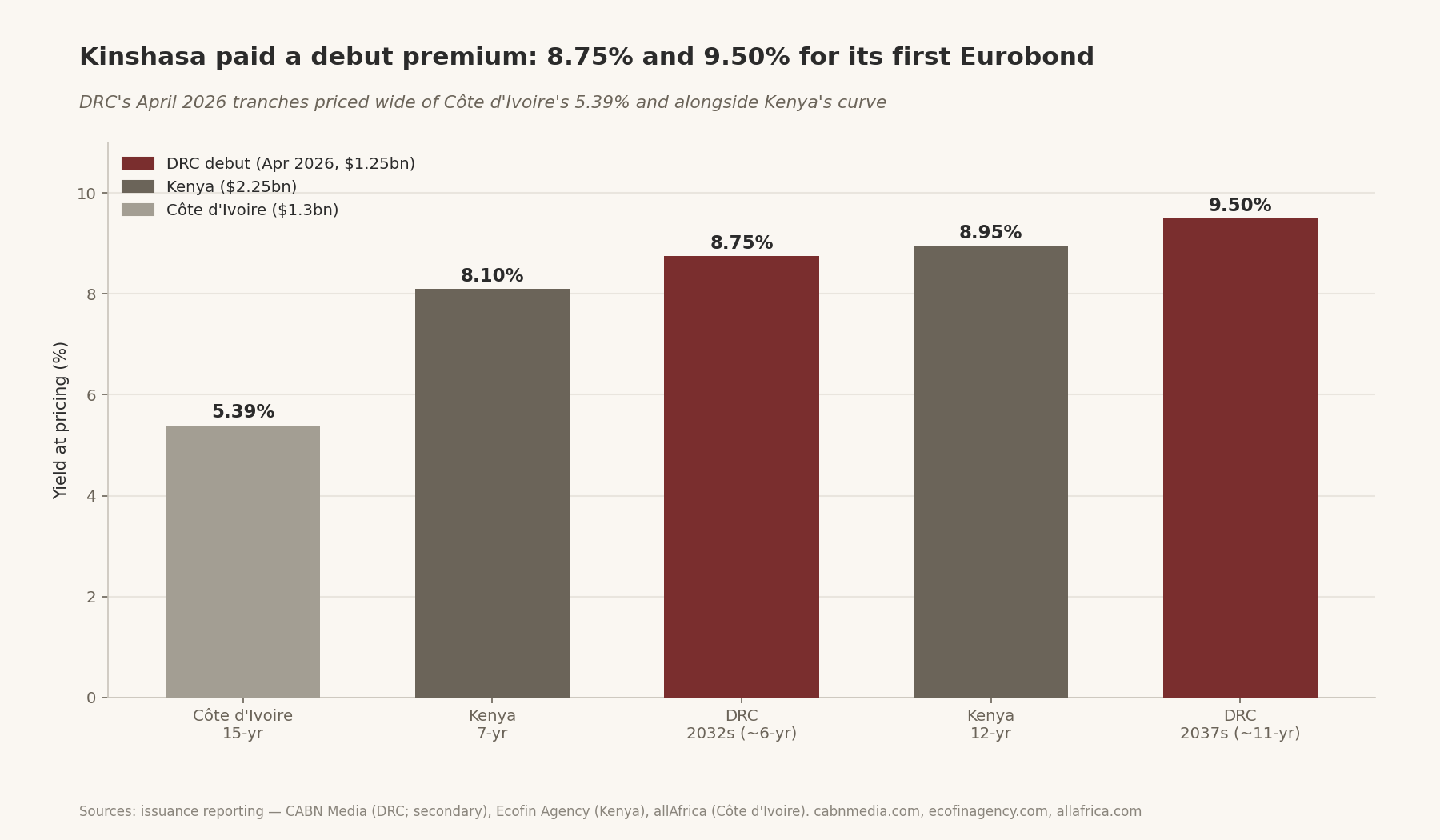
Between the lines. Multi-venue mediation creates optionality for the parties: each can bank credit in one forum while withholding compliance in another. The Congolese sovereign bond market is meanwhile pricing an improving relationship with Washington — Kinshasa raised US$1.25 billion in a debut Eurobond in April 2026 at yields of 8.75% and 9.50%, reported by CABN Media. Capital is treating the process as durable; the front line is not.
What to watch. Whether the ceasefire oversight and verification mechanism becomes operational with published findings; whether a comprehensive DRC–M23 agreement is signed; the sixth Joint Oversight Committee outcome; and whether implementation scoring moves materially above the 23% mark.
Method and sources. Primary joint statements from the US State Department, the AU peace and security portal, and the US Embassy in Kigali; UN News briefings and Security Council reporting; implementation scoring via HumAngle; bond pricing via CABN Media, which we flag as secondary market reporting.
Related reading: Guinea-Bissau's calendar coup; Africa's 2026 borrowing window.
Charts & visuals
X: One year of the Washington Accords: five oversight committees, two negotiating tracks, one implementation score of 23.3%. Meanwhile Kinshasa raised $1.25bn in its debut Eurobond. Capital and the front line disagree →
LinkedIn: The DRC–Rwanda peace architecture is now a year old. It has produced a state-to-state agreement, a Doha rebel track, AU mediation via Togo, and five Joint Oversight Committee meetings. Independent scoring put implementation at 23.3% after seven months, and the UN mission is still urging parties to "stay the course". Bond investors, meanwhile, bought $1.25bn of Congolese debut debt. Our analysis of why multi-venue mediation can slow compliance.
Author
Sign up for New Axis Media newsletters.
Stay up to date with curated collection of our top stories.