The Lobito Corridor: A Rail Line, a Superpower Contest, and the New Geography of African Trade
Backed by Washington and pitched as the West’s answer to Chinese mining dominance, the Lobito Corridor is moving from blueprint to proving ground. Its real test isn’t geopolitics — it’s whether the trains run on time.
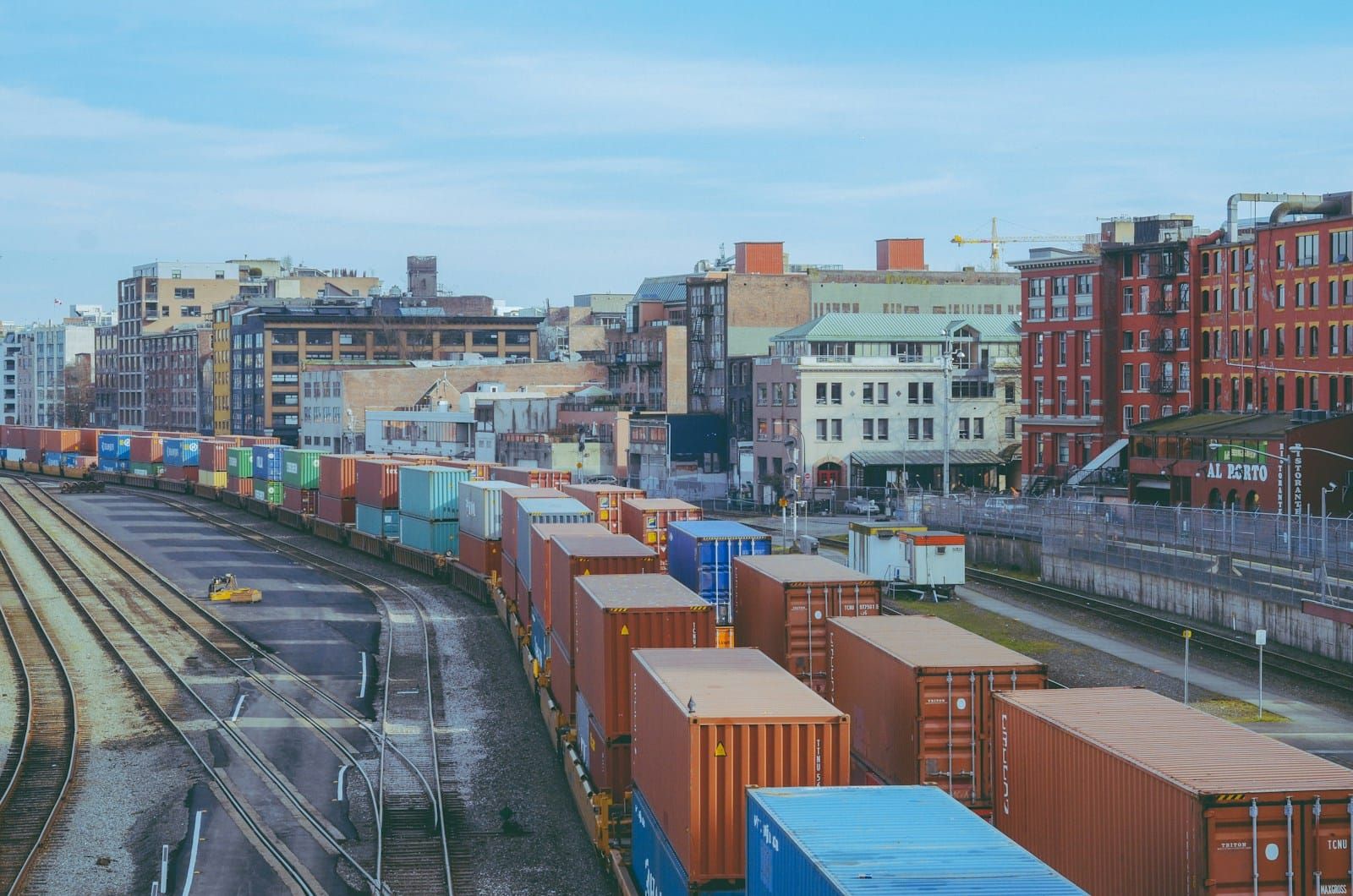
For most of the last two decades, the map of how African minerals reached global markets pointed east: copper and cobalt from the Democratic Republic of Congo and Zambia flowed overland to Indian Ocean ports — through Tanzania and South Africa — into supply chains largely shaped by Chinese buyers and financiers. That routing was long, congested and slow, sometimes taking weeks to move a container of copper from the Zambian Copperbelt to a port.
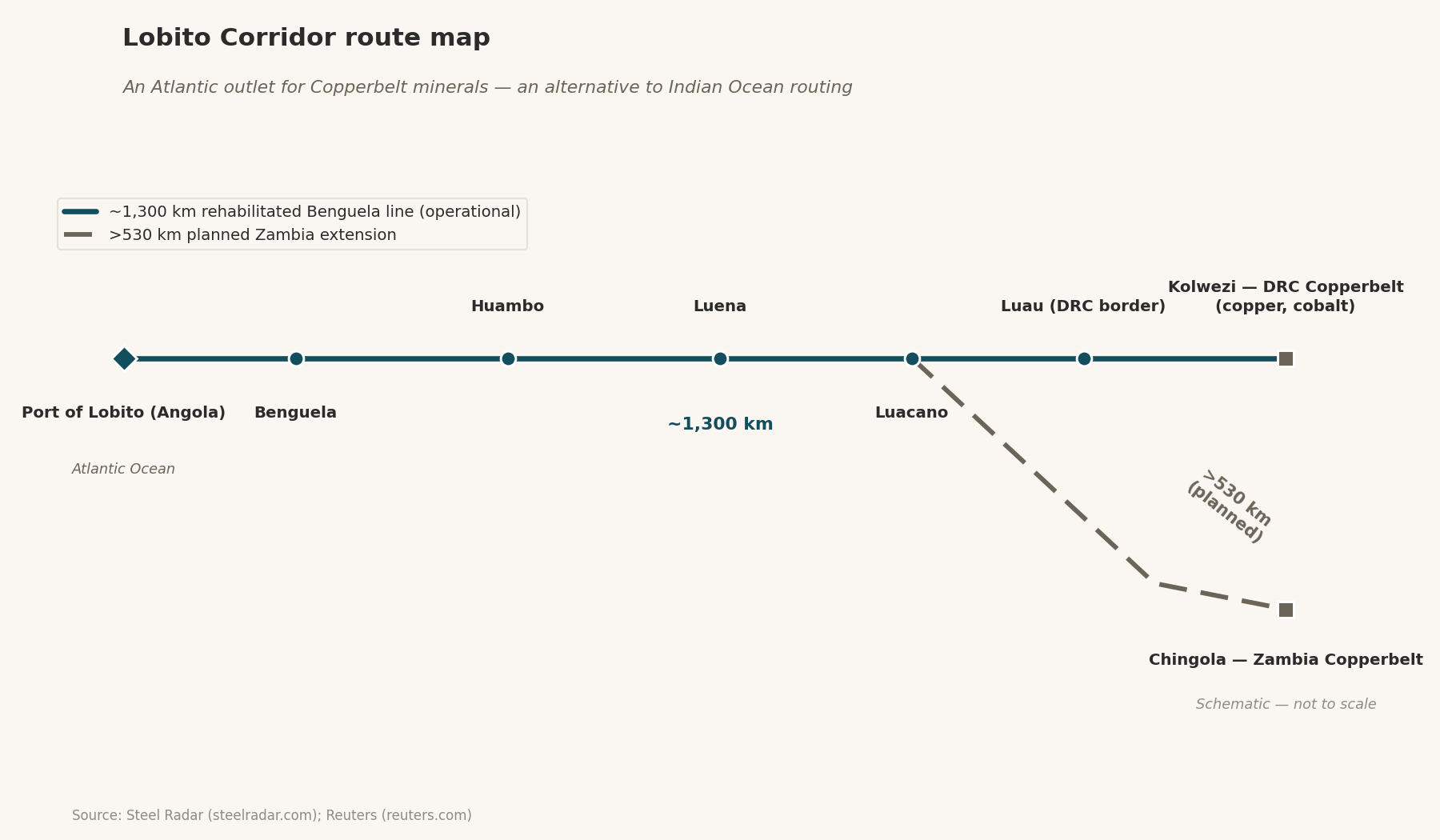
The Lobito Corridor is an attempt to redraw that map toward the Atlantic. Linking Angola, the DRC and Zambia, it was pitched as “the West’s answer to China’s dominance in African mining,” backed by more than $2.7 billion in pledged investment to move copper and cobalt vital to the energy transition (RTL Today / AFP). Geography is the corridor’s core argument: for minerals bound for Europe and the Americas, the Atlantic route via Lobito is dramatically shorter than the Indian Ocean alternative.
From memorandum to money
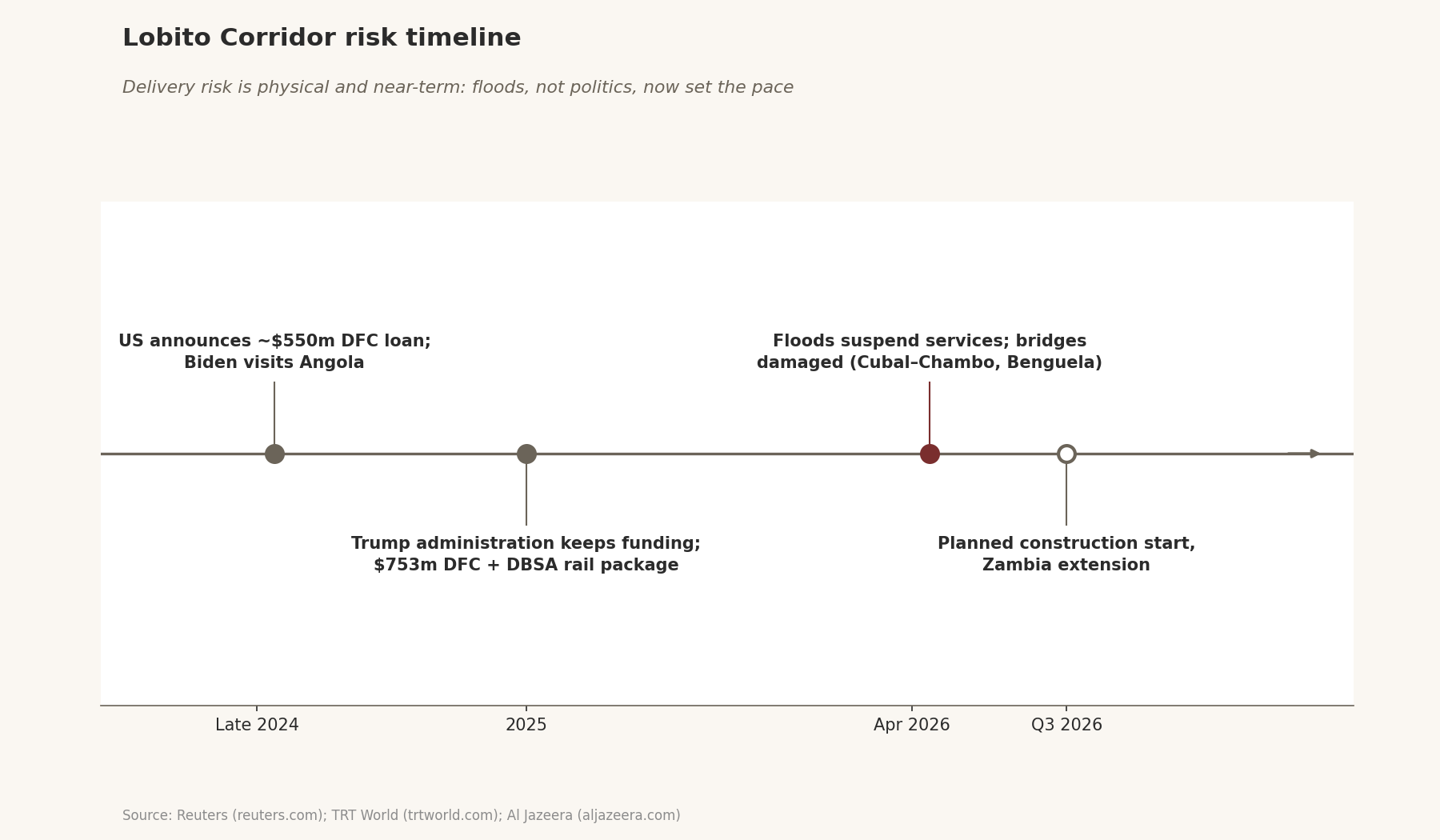
The project’s political lineage is bipartisan in Washington — a rarity in an era of polarised US foreign policy, and a sign of how firmly critical-minerals security has become a bipartisan strategic priority. The Biden administration signed a memorandum of understanding and provided an initial $550 million loan, and President Biden visited Lobito in late 2024 to advance the plan (TRT World). But it was the Trump administration that “secured funding in 2025” (Al Jazeera). The continuity across two administrations that agree on little else is itself the story: whoever governs Washington, the imperative to reduce dependence on Chinese-controlled mineral supply chains persists.
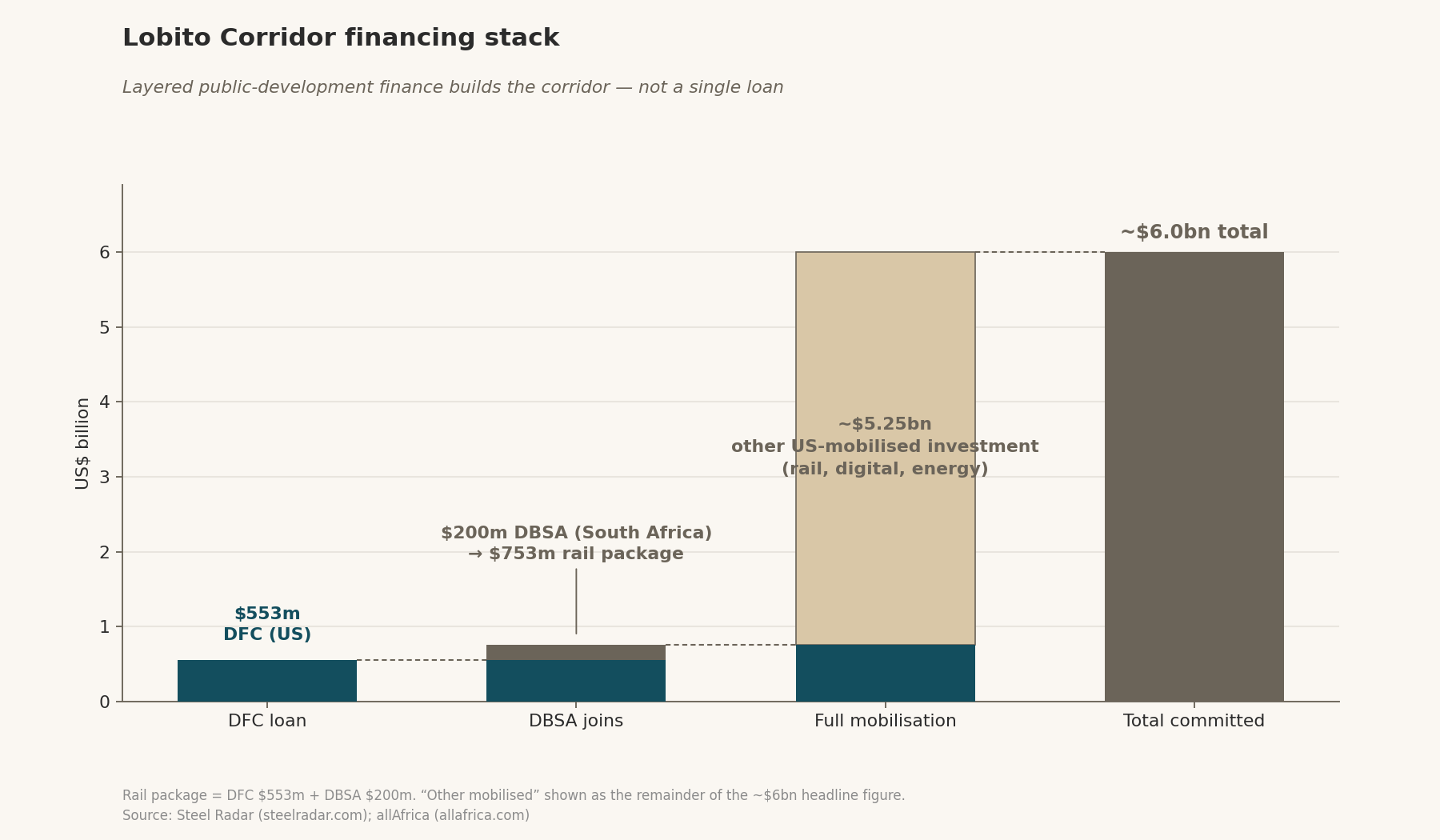
By late 2025 a $753 million financing package had been assembled — $553 million from the US International Development Finance Corporation and $200 million from the Development Bank of Southern Africa — for the rehabilitation and capacity expansion of roughly 1,300 kilometres of railway (Steel Radar). By April 2026, US officials said Washington had mobilised around $6 billion in total investment across rail, digital connectivity and energy (allAfrica). The layered structure — a US development-finance anchor, a regional development bank, and private co-investment — is deliberate: it spreads risk and signals that this is meant to be a commercially viable system, not an aid project.
The corridor has become a signature example of a new, transactional US approach to Africa — the US Africa envoy cited it as a “model for ties,” and it is explicitly framed as counter-China infrastructure (Al Jazeera). The Economist noted that US businesses in December gained their first opportunity to access mining and exploration sites in the DRC, and that $553 million had been committed to the corridor precisely to speed shipments to the United States (The Economist). The rail line, in other words, is inseparable from a broader push to give Western firms a foothold in the mines the corridor is meant to serve.
The delivery test
Here the story turns from geopolitics to engineering — and to weather. In April 2026, operations on the Lobito Atlantic Railway were suspended indefinitely after flooding from overflowing rivers damaged bridges between Cubal and Chambo and near Benguela (Reuters). The disruption was a pointed reminder that a corridor’s strategic value collapses if the physical line is fragile — and that climate volatility is a first-order operational risk for African infrastructure, not a footnote. A single-track railway with vulnerable bridges is only as reliable as its weakest span; investors pricing the corridor’s returns must price the weather.
As AFP framed it, the mega-project is “shifting from blueprint to proving ground” — a delivery test, not a diplomatic one (RTL Today / AFP). The Zambian extension is the next frontier. Zambia expects to begin construction on the line linking its copper-rich Chingola area to Angola’s Benguela railway at Luacano — over 530 kilometres — by the third quarter of 2026, with the Africa Finance Corporation acting as developer (Reuters). This greenfield segment is arguably the harder half: rehabilitating an existing line is one thing; building 530 kilometres of new railway through difficult terrain, on schedule and on budget, is another.
What Angola actually gets
For Luanda, the corridor is more than a transit fee. It is a chance to reposition Angola from an oil exporter dependent on a single commodity to a logistics hub for Central and Southern Africa — the Atlantic gateway for the minerals of the energy transition. This dovetails precisely with the diversification imperative driving the rest of Angola’s economic strategy: a functioning corridor would give the country a durable, non-oil source of foreign exchange and a strategic role that outlives its barrels. US officials describe the investment as building “strategic infrastructure that benefits businesses, workers, and security” (allAfrica).
If the corridor also carries Zambian and Angolan agricultural exports, as planned, it could deepen intra-regional trade rather than merely extracting raw materials (Reuters). This is the pivotal design choice: a corridor that only moves unprocessed minerals outward reproduces the extractive pattern; one that also carries food, inputs and finished goods between African markets becomes a genuine artery of continental trade — and a concrete instance of the African Continental Free Trade Area’s promise (see Article 13).
The honest caveat
The corridor is a genuinely significant piece of infrastructure diplomacy — but it is not yet a finished system, and comparisons to failed marquee railways elsewhere are instructive. Kenya’s Mombasa–Nairobi line, financed by China, has “failed to perform as anticipated,” leaving Nairobi paying about $1 billion a year on a project that became “a major financial burden” (Africa Defense Forum). The lesson for Lobito is not that Western financing is inherently better — it is that corridors succeed or fail on volumes, maintenance and governance, not on the flags of their financiers. A railway needs enough freight to cover its costs, disciplined upkeep to stay open, and transparent operating agreements to avoid becoming a political liability.
The strategic contest is real, and the geography is compelling. But the deciding variables are unglamorous: throughput, reliability, and whether the DRC’s mines can supply steady volumes despite the conflict in the country’s east (see Article 7). The trains, in the end, have to run.
Charts & visuals
X: The Lobito Corridor: a 1,300km railway, ~$6bn in US-led investment, pitched as the West’s answer to China in African mining. But in April 2026 floods shut it down. The real test isn’t geopolitics — it’s whether the trains run. 🚂
LinkedIn: The Lobito Corridor is redrawing the map of how African minerals reach the world — from Indian Ocean routes toward the Atlantic, backed by ~$6bn in US-led financing. It’s the flagship of a new, transactional US–Africa strategy. But an April 2026 flood suspension is a reminder: corridors are won on volumes and maintenance, not flags. New Axis Media on the delivery test.
Author
Sign up for New Axis Media newsletters.
Stay up to date with curated collection of our top stories.