Southern Africa's Power Triangle: How Angola, the DRC, Zambia and South Africa Are Being Rewired
Copper, cobalt, ports and rail are reorganising Southern Africa's economic geography. Four countries hold the pieces — but conflict, capacity and competing patrons will decide whether integration or extraction wins.
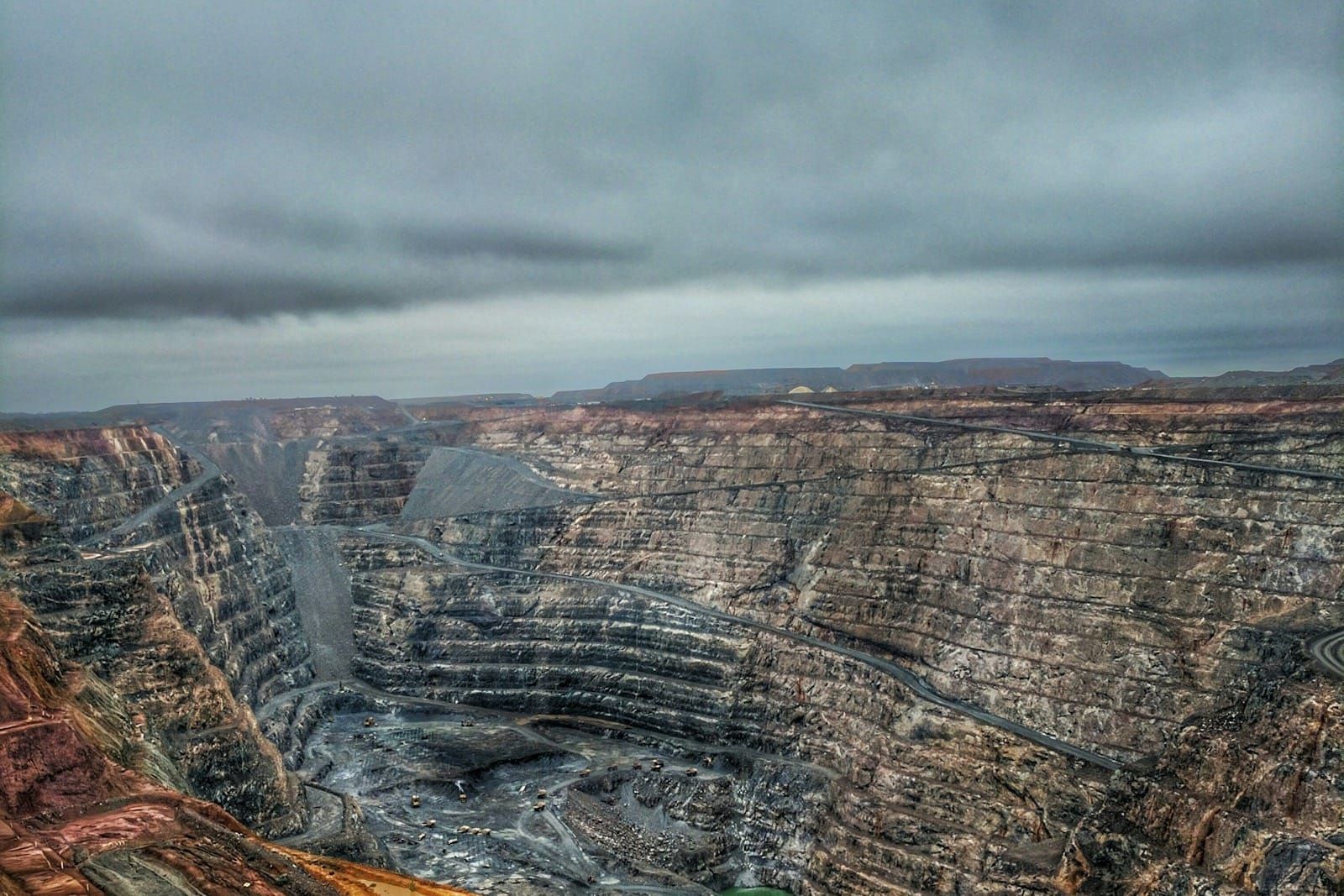
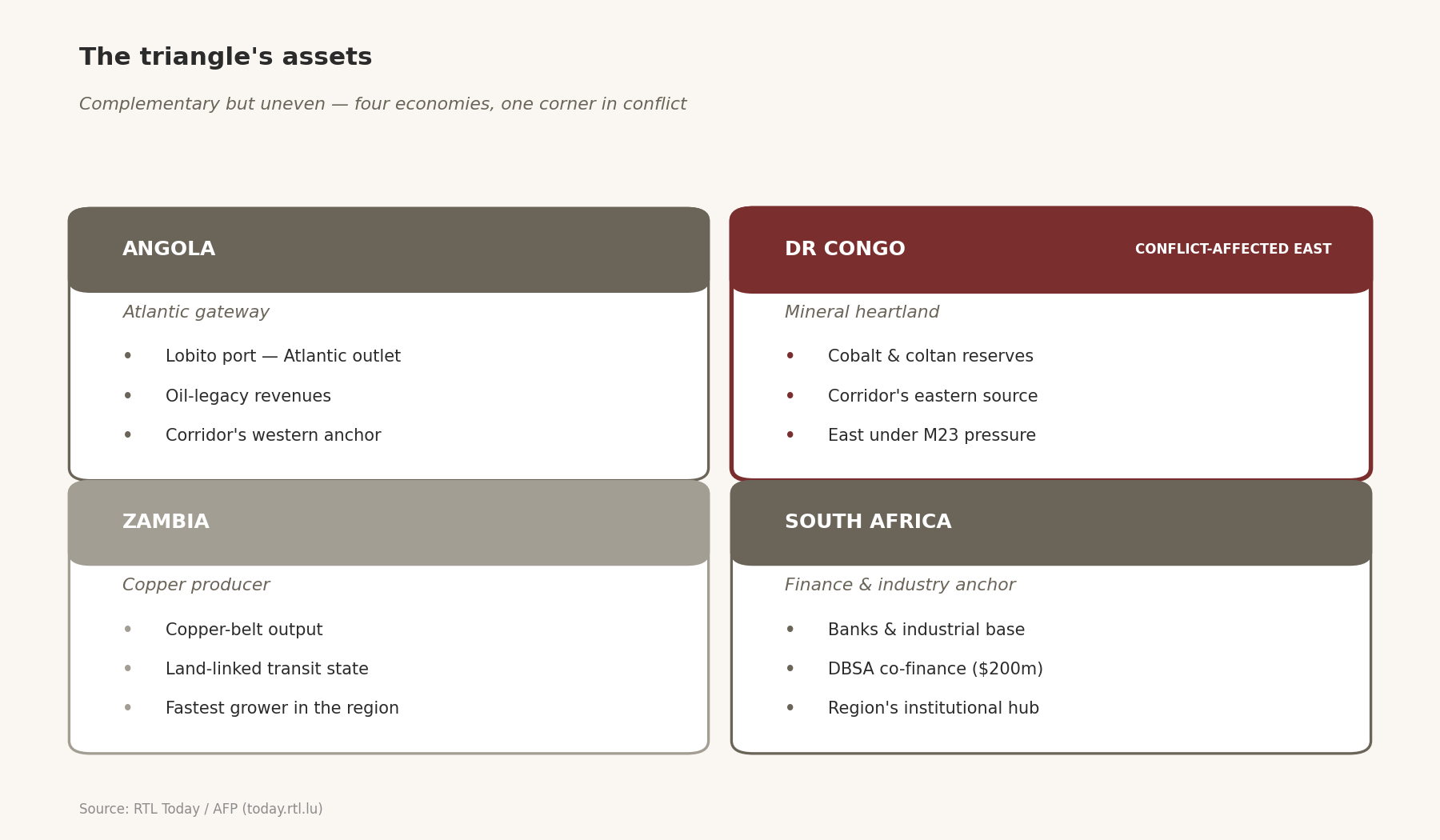
Draw a line connecting Luanda, Kinshasa, Lusaka and Pretoria and you have sketched the spine of one of the most consequential economic reorganisations underway anywhere in the Global South. Angola offers the Atlantic port and the oil legacy; the DRC and Zambia hold the copper and cobalt the energy transition cannot do without; South Africa remains the region's financial and industrial anchor. The Lobito Corridor is the physical thread the powers of the world are competing to control (RTL Today / AFP). What makes the region so contested is the rare combination of assets it concentrates: the raw materials of decarbonisation, an Atlantic outlet, and an industrial base — the pieces of a value chain that, if assembled, could keep far more wealth on the continent.
The prize: minerals for the transition
The scale of the resource base is what draws in every external power. The DRC and Zambia sit atop the copper belt that feeds global electrification, and the corridor is designed to move that copper and cobalt to the Atlantic (RTL Today / AFP). Cobalt is central to lithium-ion batteries; copper is the metal of the electric grid, the EV, and the data centre. Whoever controls their supply holds leverage over the entire clean-energy economy — which is why the United States, China, the EU and the Gulf are all manoeuvring for position across these four countries.
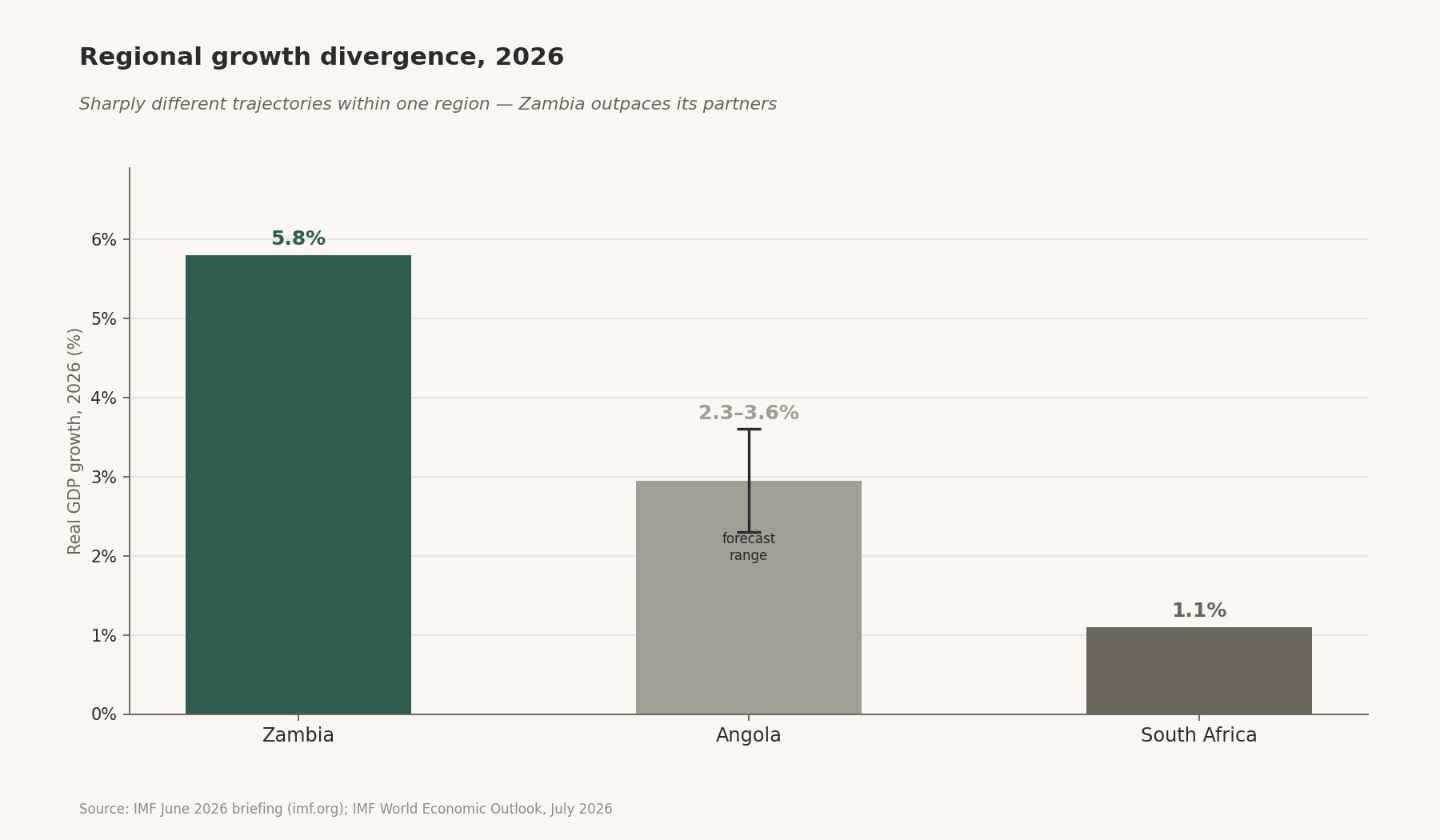
Zambia's own outlook is improving: the IMF projects 5.8% growth in 2026 and assesses its debt as sustainable, though the country remains at high risk of debt distress (IMF, June 2026). That combination — strong growth alongside lingering distress risk — captures Zambia's post-restructuring reality (see Article 8): out of the acute crisis, but not yet on solid ground. The Zambian government expects to begin construction on its corridor extension — over 530 kilometres linking Chingola to Angola's Benguela railway — by Q3 2026 (Reuters). For Lusaka, the corridor is a chance to cut the cost and time of exporting copper and to reduce dependence on the congested southern routes through South Africa.
The fracture: war in the east
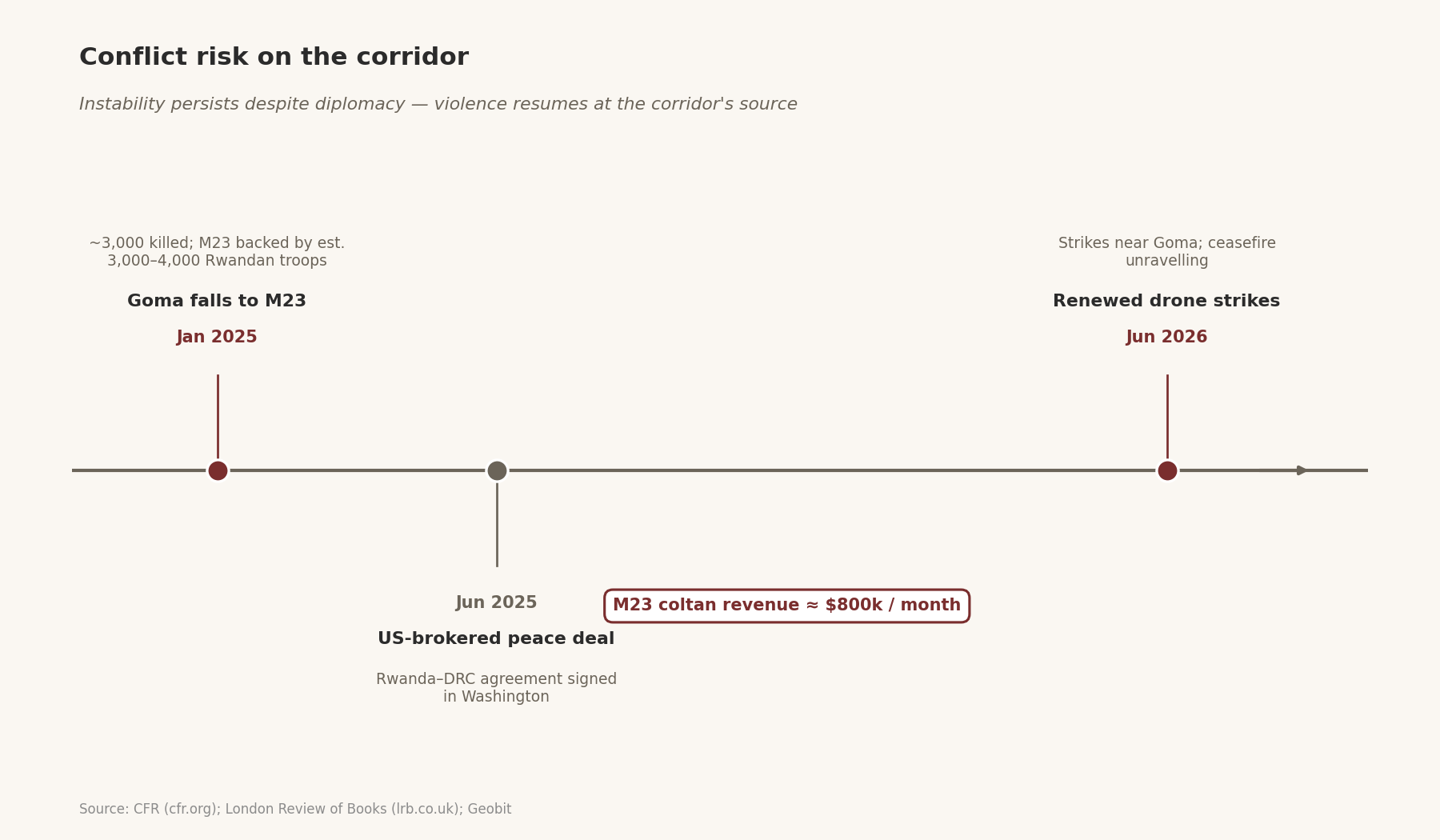
But the triangle has a bleeding corner. Eastern DRC — the very region richest in coltan and cobalt — has been convulsed by the Rwanda-backed M23 rebellion, which seized Goma in early 2025 with support from an estimated three to four thousand Rwandan troops, in fighting that left roughly 3,000 dead in under two weeks and displaced hundreds of thousands (CFR Global Conflict Tracker; European Parliament). The conflict is not incidental to the mineral economy; it is entangled with it. UN observers estimated coltan reserves were providing M23 with around $800,000 a month (London Review of Books) — a direct illustration of how the same resources that draw in global capital also finance the violence that threatens it.
A June 2025 US-brokered Rwanda–DRC peace deal has not stopped the fighting: in June 2026 the Congolese army launched a drone strike on an M23 position near Goma, "a war that has not paused despite a year of ceasefire announcements" (Geobit). Conflict in the east is the single largest risk to the entire corridor thesis. A supply chain routed through instability is a supply chain that investors will discount and buyers will hedge — and no amount of rail rehabilitation on the Angolan side can compensate for volumes that cannot safely leave the mines on the Congolese side.
The anchor under strain
South Africa, the region's economic keystone, is growing slowly — the IMF projected around 1.1% growth for 2026, improving on the back of strengthened policy frameworks and structural reforms (IMF WEO briefing, July 2026). For the region's largest economy and financial hub, growth barely above 1% is a structural drag: it limits the domestic demand, cross-border investment and institutional capacity South Africa can extend to its neighbours. Pretoria also faces its own "China dilemma," balancing deep trade ties with Beijing against Western pressure over supply chains (Foreign Policy Research Institute). A slow-growing anchor that is itself caught between the great powers cannot underwrite regional integration the way a dynamic one could.
Two futures: integration or extraction
The optimistic reading is genuine. If the corridor carries not just minerals but Zambian and Angolan agricultural exports, it could deepen intra-regional trade and generate jobs (Reuters; Al Jazeera). In this future, the four countries move up the value chain together — refining copper, processing cobalt, feeding an industrial base — and the corridor becomes an artery of a genuinely integrated regional economy.
The pessimistic reading is that the whole architecture is designed to extract raw materials more efficiently toward external markets, with value capture happening elsewhere — a concern amplified by the IEA's finding that mineral sovereignty depends "not only on what is beneath the ground but on control over industrial inputs" and refining capacity (Energy Transition Africa on IEA 2026). In this future, faster rail simply means faster extraction, and the jobs, profits and technology of refining accrue in Asia, Europe or North America while the region keeps the holes in the ground. Which future prevails depends less on geology than on the terms the four governments can negotiate and the industrial policy they can implement.
The New Axis read
The four countries of Southern Africa's power triangle are not passive terrain in a great-power contest. They are strategic actors deciding, deal by deal, whether external competition can be converted into leverage — rail, refining, jobs — or whether it merely reproduces an old extractive pattern with new flags. The determining variables are unglamorous: whether the eastern DRC stabilises, whether Zambia builds its rail on time and on budget, whether the corridor carries value-added goods rather than only ore, and whether South Africa's slow growth can still anchor the region. Coordination among the four — through SADC and bilateral deals — will matter as much as any single megaproject. Geography has handed these countries the pieces. Governance will decide the game.
Charts & visuals
X: Copper, cobalt, ports & rail are rewiring Southern Africa. Angola, DRC, Zambia & South Africa hold the pieces. But one corner is bleeding: eastern DRC's war hasn't paused despite a 2025 peace deal. Integration or extraction? 🧵
LinkedIn: Southern Africa is being reorganised around the minerals of the energy transition — and four countries hold the decisive pieces. New Axis Media maps the power triangle of Angola, the DRC, Zambia and South Africa: complementary assets, a slow-growing anchor, and a war in the eastern Congo that could unravel the entire corridor thesis.
Author
Sign up for New Axis Media newsletters.
Stay up to date with curated collection of our top stories.